AP Notes, Outlines, Study Guides, Vocabulary, Practice Exams and more!

AP Biology Chapter 25 Flashcards

Terms : Hide Images
8431821327AnalogySimilarity between two species that is due to convergent evolution rather than to descent from a common ancestor with the same trait0
8431821328BinomialThe two-part latinized name of a species, consisting of genus and specific epithet1
8431821329CladeEach evolutionary branch in a cladogram2
8431821330CladisticsThe analysis of how species may be grouped into clades3
8431821331CladogramA diagram depicting patterns of shared characteristics among species4
8431821332Classthe taxonomic category above order5
8431821333DomainA taxonomic category above the kingdom level. The three domains are Archaea, Bacteria, and Eularya6
8431821334Familythe taxonomic category above genus7
8431821335Fossil RecordsThe chronicle of evolution over millions of years of geologic time engraved in the order in which fossils appear in rock strata8
8431821336GenusA taxonomic category above the species level, designated by the first word of a species' two-part scientific name9
8431821337HomologySimilarity in characteristics resulting from a shared ancestor10
8431821338HomoplasySimilar structure or molecular sequence that has evolved independently in two species11
8431821339In-groupIn a cladistic study of evolutionary relationships among taxa of organisms, the group of taxa that is actually being analyzed12
8431821340KingdomA taxonomic category, the second broadest after domain13
8431821341Maximum likelihoodA principle that states that when considering multiple phylogentic hypotheses, one should take into account the one that reflects the most likely sequence of evolutionary events, given certain rules about how DNA changes over time14
8431821342Maximum parsimonyA principle that states that when considering multiple explanations for an observation, one should first investigate the simplest explanation that is consistent with the facts15
8431821343Molecular clockAn evolutionary timing method based on the observation that at least some regions of genomes evolve at constant rates16
8431821344Molecular systematicsThe comparison of nucleic acids or other molecules in different species to infer relatedness17
8431821345MonophyleticPertaining to a grouping of species consisting of an ancestral species and all of its descendants; a clade18
8431821346Neutral theoryThe hypothesis that much evolutionary change in genes and proteins has no effect on fitness and therefore is not influences by natural selection19
8431821347OrderThe taxonomic category above family20
8431821348Orthologous genesHomologous genes that are passed in a straight line from one generation to the next, but have ended up in different gene pools because of speciation21
8431821349Out-groupA species or group of species that is closely related to the group of species that is closely related to the group of species being studied but clearly not as closely related as any study-group members are to each other22
8431821350Paralogous genesHomologous genes that are found in the same genome due to gene duplication23
8431821351ParaphyleticPertaining to a grouping of species that consists of an ancestral species and some, but not all, of its decendants24
8431821352Phylogenetic treeA branching diagram that represents a hypothesis about evolutionary relationships25
8431821353PhylogenyThe evolutionary history of a species or group of related species26
8431821354PhylogramA phylogenetic tree in which the lengths of the branches reflect the number of genetic changes that have taken place in a particular DNA or RNA sequence in the various lineages27
8431821355Phylumthe taxonomic category above class28
8431821356PolyphyleticPertaining to a grouping of species derived from two or more different ancestral forms29
8431821357Shared derived characterAn evolutionary novelty that evolved within a particular clade30
8431821358Shared primitive characterA character displayed in species outside a particular taxon31
8431821359Specific epithetThe second part of binomial, referring to one species within a genus32
8431821360SystematicsThe analytical study of the diversity and relationships of organisms, both present day and extinct33
8431821361TaxonThe named taxonomic unit at any given level of classification34
8431821362TaxonomyOrdered division of organisms into categories based on a set of characteristics used to assess similarities and differences, leading to a classification scheme; the branch of biology concerned with naming and classifying the diverse forms of life35
8431821363Ultrametric treeA phylogenetic tree in which the lengths of the branches reflect measurements of geologic time36

AP Biology Chapter 27 Flashcards

ch 27 for ap bio (bacteria)

Terms : Hide Images
9220125158peptidoglycanA polymer composed of modified sugars cross-linked by short polypeptides. This molecular fabric encloses the entire bacterium and anchors other molecules that extend from its surface.0
9220125159Gram stainA technique that allows scientists to categorize many bacterial species according to differences in cell wall composition.1
9220125160Gram-positiveThese bacteria tend to have simpler walls with a relatively large amount of peptidoglycan.2
9220125161Gram-negativeThese bacteria tend to have less peptidoglycan, are more structurally complex, with an outer membrane that contains lipopolysaccharides (carbohydrates bonded to lipids).3
9220125162capsuleA dense and well-defined sticky layer of polysaccharide or protein that surrounds the cell wall of many prokaryotes.4
9220125163fimbriaehair-like appendages that allow prokaryotes to stick to their substrate or to one another.5
9220125164piliAppendages that pull two cells together prior to DNA transfer from one cell to the other; tend to be longer and less numerous than fimbriae.6
9220125165nucleoidA region of cytoplasm containing the prokaryote's genetic material; not enclosed by a membrane.7
9220125166plasmidsSmaller rings of independently replicating DNA molecules that only carry a few genes, found in prokaryotic cells, in addition to its single chromosome.8
9220125167transformationThe genotype and possibly phenotype of a prokaryotic cell are altered by the uptake of foreign DNA from its surroundings.9
9220125168transductionPhages carry prokaryotic genes from one host cell to another.10
9220125169conjugationDNA is transferred between two prokaryotic cells (usually of the same species) that are temporarily joined. In bacteria, the DNA transfer is always one-way: One cell donates the DNA, and the other receives it.11

AP Biology Chapter 25 Flashcards

Terms : Hide Images
7446014666protocellsdroplets with membranes that maintained an internal chemistry different from that of their surroundings, nonliving structures that are believed to have evolved into prokaryotes0
7446014667Oparin and Haldanehypothesized early earth atmosphere composed of ammonia, hydrogen, hydrogen sulfide, carbon dioxide, nitrogen, water vapor, and methane; thought at high temperatures organic compounds could form -> when earth cooled compounds could be found in water + lightning/UV radiation -> chemical reaction -> proteins1
7446014668Miller and Ureytested earlier scientist hypothesis in experiments that simulated conditions on early Earth in a closed system and produced a variety of amino acids.2
7446014669self-replicating RNAA current leading hypothesis about the first system of inheritance in the earliest life forms involves_____.3
7446014670Ribozymescatalytic RNA molecules that function as enzymes and can splice RNA4
7446014671Fossil recorda historical sequence of life indicated by fossils found in layers of the Earth's crust5
7446014672Paleontologistsscientists who study the fossil record.6
7446014673Relative DatingMethod of determining the age of a fossil by comparing its placement with that of fossils in other layers of rock. Oldest fossils are found in deepest strata.7
7446014674Radiometric Datinga method of determining the absolute age of an object by comparing the relative percentages of a radioactive (parent) isotope and a stable (daughter) isotope8
7446014675Half-lifeLength of time required for half of the radioactive atoms in a sample to decay9
7446014676Prokaryotesa microscopic single-celled organism that has neither a distinct nucleus with a membrane nor other specialized organelles. Include the bacteria and cyanobacteria. Earliest living organisms10
7446014677AerobicContaining oxygen; referring to an organism, environment, or cellular process that requires oxygen.11
7446014678AnaerobicLacking oxygen; referring to an organism, environment, or cellular process that lacks oxygen and may be poisoned by it12
7446014679EukaryotesUnicellular nonbacterial organisms bounded by a cell membrane and contains cytoplasm. cytoplasm contains organelles.appeared about 2.1 billion years ago.13
7446014680Endosymbiotic hypothesisExplains the origin of eukaryotes from prokaryotes. The theory that mitochondria and plastids, including chloroplasts, originated as prokaryotic cells engulfed by an ancestral eukaryotic cell. The engulfed cell and its host cell then evolved into a single organism.14
7446014681Multicellular eukaryotesorganisms with many cells and true nucleus and membrane bound organelles. evolved about 1.2 billion years ago.15
7446014682Colonization of landPlants, fungi and animals begin to appear. about 500 million years ago16
7446014683Continental driftthe gradual movement and formation of continents (as described by plate tectonics). Can help explain unique biogeography.17
7446014684Mass extintionsbrief periods of times where a large number of species disappeared. global event from global environmental changes ( dinosaurs)18
7446014685Adaptive radiationDivergent evolution in which ancestral species evolve into an array of species to fit a number of diverse habitats. Common after mass extinctions.19
7446014686Evo-devoEvolutionary developmental biology; a field of biology that compares developmental processes of different multicellular organisms to understand how these processes have evolved and how changes can modify existing organismal features or lead to new ones.20
7446014687ExaptationsStructures that evolve in one context but become co-opted for another function. Feathers may originally have been beneficial for thermoregulation.21
7446014688Heterochronyis an evolutionary change in the rate or timing of developmental events. For example, an organism's shape depends in part on the relative growth rates of different body parts during development. Changes to these rates can alter the adult form substantially. Ex increase for bat finger bones lead to flight. decrease for whale hind leg bones leads to loss of hind legs.22
7446014689Homeotic genesAny of the master regulatory genes that control placement and spatial organization of body parts in organisms23
7446014690Hox genesa group of related genes that control the body plan of an embryo along the anterior-posterior (head-tail) axis24

AP Biology (Campbell) Chapter 7 Flashcards

Terms : Hide Images
5703463524plasma membranecreates compartments within cells and barrier between intra- & extracellular0
5703463525selectively permeablerules of chemistry determine movement across membrane.1
5703463526phospholipidsmembrane lipid structure2
5703463527lipids and proteinsmain macromolecules in membranes3
5703463528amphipatic moleculeshave hydrophobic and hydrophilic regions4
5703463529fluid mosaic modelThe arrangement of phospholipids and proteins in biological membranes is described by the...5
5703463530freeze-fracturepreparation technique that splits a membrane along the middle of the phospholipid bilayer6
5703463531transmembrane proteinsthe integral protein completely spans the membrane as...7
5703463532integral proteinsproteins that penetrate the hydrophobic interior of the lipid bilayer8
5703463533peripheral proteinsproteins that are not embedded in the lipid bilayer9
5703463534cell-cell recognitionthe ability of a cell to disitnguish one type of neighboring cell from another.10
5703463535transport proteinsproteins that control movement of molecules across plasma membrane11
5703463536channel proteinstransport proteins that have a hydrophilic channel that certain molecules or ions use as a tunnel though the membrane.12
5703463537aquaporinschannel proteins that facilitate the passage of water13
5703463538carrier proteinstransport proteins that bind to molecules and change shape to shuttle them across the membrane.14
5703463539diffusionmovement of molecules of any substance to spread out in available space15
5703463540concentration gradientdifference in concentration within or between 2 areas16
5703463541passive transporttransport that requires hydrolysis of ATP to take place17
5703463542osmosisthe diffusion of water across a selectively permeable membrane18
5703463544isotonic (animal cell)if a cell with no cell wall is immersed in an enviroment where there is no net movement of water across the plasma membrane. Stays the same.19
5703463545hypertonic (animal cell)when the cell is immersed in a solution where it loses water to its environment, shrivels and probably dies.20
5703463546hypotonic (animal cell)when a cell is immersed in a solution, water enters the cell faster than it leaves, it swells and lyses (explodes) like an overfilled water balloon.21
5703463547osmoregulationadaptations that control of water balance across plasma membranes22
5703463548parameciumis a protist that is hypertonic to the pond water in which it lives.23
5703463549turgidwhen the plant cell is very firm, which is a healthy state for most plant cells.24
5703463550hypotonic (plant cell)when a plant cell is immersed in a __________ solution the cell contents swell due to osmosis until the elastic cell wall exerts turgor pressure on the cell that opposes further water outake.25
5703463551isotonic (plant cell)when a plant cell is immersed in a _______ solution; there is no net movement. The cell becomes flaccid and the plant may wilt.26
5703463552flaccidlimp, not firm or strong (If a plant is not watered enough, its leaves become droopy and flaccid.)27
5703463553hypertonic (plant cells)the plant cell loses water, its volume shrinks. The plasma membrane pulls away from the wall, this is plasmolysis. It is lethal to the cell.28
5703463554plasmolysisThis happens when a cell shrinks inside its cell wall while the cell wall remains intact. The plasma membrane pulls away from the wall.29
5703463555facilitated diffusionthe passive movement of molecules down their concentration gradient with the help of transport proteins.30
5703463556ion channels (gated channels)Channels that open or close depending on the presence or abscence of an electrical, chemical, or physical stimulus.31
5703463557active transporttransport that requires the cell to expend metabolic energy and enables a cell to maintain internal concentrations of small molecules. Requires ATP hydrolysis.32
5703463558ATPsupplies energy for most active transport33
5703463559sodium-potassium pumptransport protein that, translocating the bound solute across the membrane. Exchanges sodium ions (Na) for potassium ions (K) across the plasma membrane of animal cells.34
5703463560membrane potentialvoltage across a membrane. Ranges form -50 to -200 millivolts. The inside of the cell is negative to the outside.35
5703463561electrochemical gradient2 combined forces drive the diffusion of ions across the membrane.36
5703463562electrogenic pumpsspecial transport proteins that generate the voltage gradient across a membrane. Ex. sodium potassium pump and proton pumps.37
5703463563sodium-potassium pumpmajor electrogenic pump in animals. Restores the electrochemical gradient by setting up a concentration gradient. It pumps 2 K ions for every 3 Na ions that it moves out, it generates a voltage.38
5703463564proton pumpsthe major electrogenic pump. Transports protons out of the cell and transfers positive charge form the cytoplasm to the extracellular solution.39
5703463565exocytosistransport vesicle budded from the Golgi apparatus is moved by the cytoskeleton to the plasma membrane. When the 2 membranes come in contact, the bilayers fuse spill the contents.40
5703463566endocytosisa cell brings in biological molecules and particulate matter by forming new vesicles from the plasma membrane. 3 types: phagocytosis, pinocytosis and receptor-mediated endocytosis.41
5703463567phagocytosisa cell engulfs a particle in a vacuole. The vacuole fuses with a lysosome to digest the particle.42
5703463568pinocytosismolecules are taken up when extracellular fluid is "gulped" into tiny vesicles.43
5703463569receptor-mediated endocytosisendocytosis that enables a cell to acquire bulk quantities of specific materials that may be in low concentrations in the environment.44

Campbell AP Biology--CHAPTER 3 Flashcards

terms along with vital information covering Campbell's 6th edition Biology textbook

Terms : Hide Images
7510768057polar covalenttype of bond in water? Oxygen is more electronegative than hydrogen and the electrons of the polar bonds spend more time near oxygen thus, making oxygen more negativity charged and hydrogen more positively charged0
7510768058Cohesionholding a substance together1
7510768059Adhesionclinging of a substance to another2
7510768060Capillary actionthe attraction of the surface of a liquid to the surface of a solid, which causes the liquid to rise or fall Capillary action is the ability of a liquid to flow in narrow spaces without assistance. It occurs because of intermolecular forces between the liquid and surrounding solid surfaces. If the diameter of the tube is sufficiently small, then the combination of surface tension (which is caused by cohesion within the liquid) and adhesive forces between the liquid and container wall act to propel the liquid. When adhesion > cohesion, capillary action occurs.3
7510768061Surface TensionA measure of how difficult it is to break/stretch a surface4
7510768062Kinetic Energyenergy of motion5
7510768063Heattotal kinetic energy due to molecular motion6
7510768064Calorieamount of heat it takes to move 1 gram of substance 1 degree Celsius higher7
7510768065Temperatureintensity of heat due to average kinetic energy8
7510768066Specific heatamount of heat needed to be absorbed /lost to change the temperature by 1 degree Celsius water has a high _____.9
7510768067water1 calorie/1 gram/I degree Celsius is the specific heat of ____.10
7510768068Evaporative coolingremains of a liquid cool down11
7510768069vaporizationamount of heat needed to turn liquid into gas12
7510768070evaporationprocess of liquid becoming gas13
7510768071How does the density of water contribute to aquatic life?if ice sank, ponds/oceans/lakes would freeze solid, killing the life (during the summer only top would thaw) instead the floating ice insulates liquid water from below preventing it from freezing and killing animals14
7510768072solutionliquid completely homogeneous of two or more substances15
7510768073solventdissolving agent16
7510768074solutesubstance dissolved17
7510768075aqueous solutionwater is solvent18
7510768076hydration shellsphere of water molecules around dissolved ions19
7510768077hydrophobicwater hating substances20
7510768078hydrophilicwater loving substances21
7510768079molethe molecular weightof a substance expressed in grams (6.02 x 10^23)22
7510768080molarityconcentration measured by number of mols/liter of solution23
7510768081hydrogen ionH+24
7510768082hydroxide ionOH-25
7510768083hydronium ionH30+26
7510768084acidsincrease H+ concentration27
7510768085basesreduce H+ concentration28
7510768086pH scalemeasures concentration of H+ (scale from 1-14)29
7510768087bufferssubstance that minimizes changes in H+/OH- concentration30
7510768088acid precipitationpresence of sulfur oxides/nitrogen oxides and gaseous compounds react with air and goes into lakes, oceans, and soil, affecting animal life31

AP Biology Chapter 12 Mitosis Flashcards

Terms : Hide Images
8242761537anaphasefourth stage of mitosis, in which the chromatids of each chromosome have separated and the daughter chromosomes are moving to the poles of the cell0
8242761538anchorage dependencethe requirement that to divide, a cell must be attached to the substratum1
8242761539benign tumora mass of abnormal cells that remains at the site of origin2
8242761540binary fissionthe type of cell division by which prokaryotes reproduce; each dividing daughter cell receives a copy of the single parental chromosome3
8242761541cell cyclean ordered sequence of events in the life of a eukaryotic cell, from its origin in the division of a parent cell until its own division into two; composed of M, G1, S, G24
8242761542cell cycle control systema cyclically operating set of molecules in the cell that triggers and coordinates key events in the cell cycle5
8242761543cell divisionreproduction of a cell6
8242761544cell platea double membrane across the midline of a dividing plant cell, between which the new cell wall form during cytokinesis7
8242761545centromerethe centralized region joining two chromatids8
8242761546centrosomematerial present in the cytoplasm of all eukaryotic cells, important during cell division; the microtubule organizing center9
8242761547checkpointa critical control point in the cell cycle where stop and go-ahead signals regulate the cycle10
8242761548chromatincomplex of DNA and proteins that makes up a eukaryotic chromosome; when a cell is not diving chromatin exists as a mass of very long, thin fibers that are not visible with a light microscope11
8242761549chromosomea threadlike, gene-carrying structure found in the nucleus; each chromosome consists of one very long DNA molecule and associated proteins12
8242761550cleavage furrowthe first sign of cleavage in an animal cell;a shallow groove in the cell surface near the old metaphase plate13
8242761551cyclina regulatory protein whose concentration fluctuates cyclically14
8242761552cytokinesisthe division of the cytoplasm to form two separate daughter cells immediately following mitosis15
8242761553density-dependent inhibitionthe phenomenon observed in normal animal cells that causes them to stop dividing when they come into contact with one another16
8242761554G0 phasea nondividing state in which a cell has left the cell cycle17
8242761555G1 phaseThe first gap, or growth phase, of the cell cycle, consisting of the portion of interphase before DNA synthesis begins.18
8242761556G2 phasethe second growth phase of the cell cycle, consisting of the portion of interphase after DNA synthesis occur19
8242761557gametea haploid cell, such as an egg or sperm. Gametes unite during sexual reproduction to form a diploid cell20
8242761558genomethe complete set of genes or genetic material present in a cell or organism.21
8242761559interphasethe period in the cell cycle when the cell is not dividing. During interphase, cellular metabolic activity is high, chromosomes and organelles are duplicated, and cell size may increase. 90% of the cell cycle22
8242761560M phasemitotic phase; the phase of the cell cycle that includes mitosis and cytokinesis23
8242761561malignant tumora cancerous tumor that is invasive enough to impair the functions of one or more organs24
8242761562metaphasethe third stage of mitosis, in which the spindle is complete and the chromosomes, attached to the microtubules at their kinetochores, are all aligned at the metaphase plate25
8242761563metastasisthe spread of cancer cells to locations distant from their original site26
8242761564mitosisa process of nuclear division in eukaryotic cells conventionally divided into 5 stages; prophase, prometaphase, metaphase, anaphase, and telophase. Mitosis conserves chromosome number by equally allocating replicated chromosomes to each of the daughter nuclei27
8242761565mitotic (M) phasethe phase of the cell cycle that includes mitosis and cytokinesis28
8242761566mitotic spindlean assemblage of microtubules and associated proteins that is involved in the movements of chromosomes during mitosis29
8242761567MPFmaturation-promoting factor (M-phase promoting factor); a protein complex required for a cell to progress from late interphase to mitosis. The active form consists of cyclin and a protein kinase30
8242761568prophasethe first stage of mitosis, in which the chromatin is condensing and the mitotic spindle begin to form, but the nucleu and nucleolus are still intact31
8242761569S phasethe synthesis phase of the cell cycle; the portion of interphase during which DNA is replicated32
8242761570sister chromatidsreplicated forms of chromosomes joined together by the centromere and eventually separating during mitosis or meiosis II33
8242761571somatic cellany cell in multicellular organisms except a sperm or egg cell34
8242761572telophasethe fifth and final stage of mitosis, in which daughter cells are forming and cytokinesis has typically begun35

Chapter 4 - AP Biology Flashcards

Terms : Hide Images
7274085348Organic ChemistryThe study of carbon compounds0
7274085349HydrocarbonsAn organic molecule consisting only of carbon and hydrogen.1
7274085350IsomerOne of several organic compounds with the same molecular formula but different structures and therefore different properties.2
7274085351Structural IsomerCompounds with the same molecular formula but different covalent arrangement of atoms.3
7274085352Geometric (cis-trans) IsomerIsomers with the same covalent partnerships but different spatial arrangements of atoms around a carbon=carbon double bond.4
7274085353EnantiomerMolecules that are mirror images of each other.5
7274085354Functional GroupsA specific configuration of atoms commonly attached to the carbon skeletons of organic molecules and usually involved in chemical reactions.6
7274085355Hydroxyl GroupA chemical group consisting of an oxygen atom joined to a hydrogen atom. Molecules possessing this group are soluble in water and are called alcohols.7
7274085356Amino GroupA chemical group consisting of a nitrogen atom bonded to two hydrogen atoms can act as a base in solution, accepting a hydrogen ion and acquiring a charge of 1⁺8
7274085357Carboxyl GroupA chemical group consisting of a single carbon atom double-bonded to an oxygen atom and also bonded to a hydroxyl group9
7274085358Phosphate GroupA chemical group consisting of a phosphate atom bonded to four oxygen atoms; important in energy transfer.10
7274085359Sulfhydryl GroupA chemical group consisting of a sulfur atom bonded to a hydrogen atom.11
7274085360AlcoholOrganic compounds containing hydroxyl groups12
7274085361Carbonyl GroupA functional group present in aldehydes and ketones consisting of a carbon atom double bonded to an oxygen atom.13
7274085362AldehydeAn organic molecule with a carbonyl group located at the end of the carbon chain.14
7274085363KetoneAn organic molecule with a carbonyl group located in the middle of the carbon chain.15
7274085364Carboxylic AcidAn organic compound containing a carboxyl group.16
7274085365AmineAn organic compound containing an amino group.17
7274085366ThiolAn organic compound containing a sulfhydryl group.18
7274085367Adenosine Triphosphate (ATP)An adenine-containing nucleoside triphosphate that releases free energy when its phosphate bonds are hydrolyzed. This energy is used to drive reactions in cells.19

Biology in Focus (AP) Chapter 35 Flashcards

Terms : Hide Images
9876553462pathogenan organism or virus that causes disease0
9876553463immune systeman animal body's system of defenses against agents that cause disease1
9876553464innate immunitya form of defense common to all animals that is active immediately upon exposure to pathogens and that is the same whether or not the pathogen has been encountered previously2
9876553465adaptive immunitya vertebrate-specific defense that is mediated by B lymphocytes (B cells) and T lymphocytes (T cells) and that exhibits specificity, memory, and self-nonself recognition; also called acquired immunity3
9876553466lysozymean enzyme that destroys bacterial cell walls; in mammals, found in sweat, tears, and saliva4
9876553467phagocytosisa type of endocytosis in which large particulate substances or small organisms are taken up by a cell. It is carried out by some protists and by certain immune cells of animals (in mammals, mainly macrophages, neutrophils, and dendritic cells)5
9876553468toll-like receptor (TLR)a membrane receptor on a phagocytic white blood cell that recognizes fragments of molecules common to a set of pathogens6
9876553469neutrophilthe most abundant type of white blood cell. Neutrophils are phagocytic and tend to self-destruct as they destroy foreign invaders, limiting their life span to a few days7
9876553470macrophagea phagocytic cell present in many tissues that functions in innate immunity by destroying microbes and in acquired immunity as an antigen-presenting cell8
9876553471natural killer cella type of white blood cell that can kill tumor cells and virus-infected cells as part of innate immunity9
9876553472interferona protein that has antiviral or immune regulatory functions. Interferon-alpha and interferon-beta, secreted by virus-infected cells, help nearby cells resist viral infection; interferon-gamma, secreted by T cells, helps activate macrophages10
9876553473complement systema group of about 30 blood proteins that may amplify the inflammatory response, enhance phagocytosis, or directly lyse extracellular pathogens11
9876553474inflammatory responsean innate immune defense triggered by physical injury or infection of tissue involving the release of substances that promote swelling, enhance the infiltration of white blood cells, and aid in tissue repair and destruction of invading pathogens12
9876553475histaminea substance released by mast cells that causes blood vessels to dilate and become more permeable in inflammatory and allergic responses13
9876553476mast cella vertebrate body cell that produces histamine and other molecules that trigger inflammation in response to infection and in allergic reactions14
9876553477cytokineany of a group of small proteins secreted by a number of cell types, including macrophages and helper T cells, that regulate the function of other cells15
9876553478lymphocytea type of white blood cell that mediates immune responses. The two main classes are B cells and T cells16
9876553479thymusa small organ in the thoracic cavity o vertebrates where maturation of T cells is completed17
9876553480T cellsthe class of lymphocytes that mature in the thymus; they include both effector cells for the cell-mediated immune response and helper cells required for both branches of adaptive immunity18
9876553481B cellsthe lymphocytes that complete their development in the bone marrow and become effector cells for the humoral immune response19
9876553482antigena substance that elicits an immune response by binding to receptors of B cells, antibodies or T cells20
9876553483antigen receptorthe general term for a surface protein, located on B cells and T cells, that binds to antigens, initiating adaptive immune responses. The antigen receptors on B cells are called B cell receptors, and the antigen receptors on T cells are called T cell receptors21
9876553484epitopea small, accessible region of an antigen to which an antigen receptor or antibody binds; also called an antigenic determinant22
9876553485heavy chainone of the two types of polypeptide chains that make up an antibody molecule and B cell receptor; consists of a variable region, which contributes to the antigen-binding site, and a constant region23
9876553486light chainone of the two types of polypeptide chains that make up an antibody molecule and B cell receptor; consists of a variable region, which contributes to the antigen-binding site, and a constant region24
9876553487antibodya protein secreted by plasma cells (differentiated B cells) that binds to a particular antigen; also called immunoglobulin. All antibodies have the same Y-shaped structure and in their monomer form consist of two identical heavy chains and two identical light chains25
9876553488major histocompatibility complex (MHC) moleculea host protein that functions in antigen resentation. Foreign MHC molecules on transplanted tissue can trigger T cell responses that may lead to rejection of the transplant26
9876553489antigen presentationthe process by which an MHC molecule binds to a fragment of an intracellular protein antigen and carries it to the cell surface, where it is displayed and can be recognized by a T cell27
9876553490effector cella lymphocyte that has undergone clonal selection and is capable of mediating an adaptive immune response28
9876553491plasma cellthe antibody-secreting effector cell of humoral immunity. Plasma cells arise from antigen-stimulated B cells29
9876553492memory cellone of a clone of long-lived lymphocyes, formed during the primary immune response, that remains in a lymphoid organ until activated by exposure to the same antigen that triggered its formation. Activated memory cells mount the secondary immune response30
9876553493clonal selectionthe process by which an antigen selectively binds to and activates only those lymphocytes bearing receptors specific for the antigen. The selected lymphocytes proliferate and differentiate into a clone of effector cells and a clone of memory cells specific for the stimulating antigen31
9876553494primary immune responsethe initial adaptive immune response to an antigen, which appears after a lag of about 10-17 days32
9876553495secondary immune responsethe adaptive immune response elicited on second or subsequent exposures to a particular antigen. The secondary immune response is more rapid, of greater magnitude, and of longer duration than the primary immune response33
9876553496humoral immune responsethe branch of adaptive immunity that involves the activation of B cells and that leads to the production of antibodies, which defend against bacteria and viruses in body fluids34
9876553497cell-mediated immune responsethe branch of adaptive immunity that involves the activation of cytotoxic T cells, which defend against infected cells35
9876553498helper T cella type of T cell that, when activated, secretes cytokines that promote the response of B cells (humoral response) and cytotoxic T cells (cell-mediated response) to antigens36
9876553499antigen-presenting cella cell that upon ingesting pathogens or internalizing pathogen proteins generates peptide fragments that are bound by class II MHC molecules and subsequently displayed on the cell surface to T cells. Macrophages, dendritic cells, and B cells are the primary antigen-presenting cells37
9876553500cytotoxic T cella type of lymphocyte that, when activated, kills infected cells as well as certain cancer cells and transplanted cells38
9876553501active immunitylong-lasting immunity conferred by the action of B cells and T cells and the resulting B and T memory cells specific for a pathogen. Active immunity can develop as a result of natural infection or immunization39
9876553502passive immunityshort-term immunity conferred by the transfer of antibodies, as occurs in the transfer of maternal antibodies to a fetus or nursing infant40
9876553503immunizationthe process of generating a state of immunity by artificial means. In active immunization, also called vaccination, an inactive or weakened form of a pathogen is administered, inducing B and T cell responses and immunological memory. In passive immunization, antibodies specific for a particular microbe are administered, conferring immediate but temporary protection41
9876553504monoclonal antibodyany of a preparation of antibodies that have been produced by a single clone of cultured cells and thus are all specific for the same epitope42
9876553505allergenan antigen that triggers an exaggerated immune response43
9876553506autoimmune diseasean immunological disorder in which the immune system turns against self44
9876553507human immunodeficiency virus (HIV)the infectious agent that causes AIDS. HIV is a retrovirus45

AP Biology Unit 1 - Chapter 5 Macromolecules Flashcards

Terms : Hide Images
8088864246macromoleculea giant molecule formed by the joining of smaller molecules, usually by a dehydration reaction.0
8088864247Four classes of biological macromoleculesProteins, carbohydrates, nucleic acids, lipids1
8088864248polymera long molecule consisting of many similar or identical monomers linked together by covalent bonds.2
8088864249monomerthe subunit that serves as the building block of a polymer.3
8088864250dehydration synthesisa chemical reaction in which two molecules become covalently bonded to each other with the removal of a water molecule.4
8088864251hydrolysisa chemical reaction that breaks bonds between two molecules by the addition of water; functions in dis-assembly of polymers to monomers.5
8088864252proteina biologically functional molecule consisting of one or more polypeptides folded and coiled into a specific three-dimensional structure.6
8088864253Functions of proteinsstructural support, catalyst, transport, defense, movement, regulation7
8088864254amino acidan organic molecule possessing both a carboxyl and an amino group. The monomers of polypeptides. There are 20 different forms. Distinguished by side chains.8
8088864255peptide bondthe covalent bond between the carboxyl group on one amino acid and the amino group on another, formed by a dehydration reaction.9
8088864256Primary structurethe level of protein structure referring to the specific linear sequence of amino acids.10
8088864257secondary structureregions of repetitive coiling or folding of the polypeptide backbone of a protein due to hydrogen bonding between constituents of the backbone (not the side chains). Helix or pleated sheet.11
8088864258B pleated sheetprotein structure with two or more segments of the polypeptide chain link side by side (called B strands) connected by hydrogen bonds between parts of the two parallel segments of the polypeptide backbone.12
8088864259tertiary structurethe overall shape of a protein molecule due to interactions of amino acid side chains, including hydrophobic interactions, ionic bonds, hydrogen bonds, and disulfide bridges.13
8088864260amino acid side chainstypes of bonds/interactions in __________ : hydrophobic interactions, ionic bonds, hydrogen bonds and disulfide bridges14
8088864261quaternary structurethe particular shape of a complex, aggregate protein, defined by the characteristic three-dimensional arrangement of its constituent subunits, each a polypeptide.15
8088864262denaturationloss of a proteins normal 3D structure; can possibly be caused by pH and temperature which affect the ionic bonds, hydrogen bonds & hydrophilic interactions16
8088864263enzymea macromolecule serving as a catalyst, a chemical agent that increases the rate of a reaction without being consumed by the reaction. most of them are proteins.17
8088864264carbohydratea sugar (monosaccharide) or one of its dimers (disaccharides) or polymers (polysaccharides). Primarily C, H and O.18
8088864265What are the functions of carbohydratesfunction as energy source & structure19
8088864266monosaccharidethe simplest carbohydrate, active alone or serving as a monomer for disaccharides and polysaccharides. Also called simple sugars, they have formulas that are generally some multiple of CH2O (1:2:1).20
8088864267disaccharidea double sugar, consisting of two monosaccharides joined by a glycosidic linkage formed by a dehydration reaction.21
8088864268glycosidic linkagea covalent bond formed between two monosaccharides by a dehydration reaction.22
8088864269polysaccharidea polymer of many monosaccharides, formed by dehydration reactions.23
8088864270starcha storage polysaccharide in plants, consisting entirely of glucose monomers joined by x glycosidic linkages. Used for energy storage.24
8088864271glycogenan extensively branched glucose storage polysaccharide found in the liver and muscle of animals; the animal equivalent of starch.25
8088864272cellulosea structural polysaccharide of plant cell walls, consisting of glucose monomers joined by B glycosidic linkages. A type of plant starch.26
8088864273lipidsany of a group of large biological molecules, including fats, phospholipids, and steroids, that mix poorly, if at all, with water (hydrophobic). No true monomers.27
8088864274What are the three types of lipids?fats/oils, phospholipids & steroids28
8088864275fat/oila lipid consisting of three fatty acids lined to one glycerol molecule; also called a triacylglycerol or triglyceride. Function as energy storage.29
8088864276saturateda fatty acid in which all carbons in the hydrocarbon tail are connected by single bonds, thus maximizing the number of hydrogen atoms that are attached to the carbon skeleton.30
8088864277unsaturateda faty acid that has one or more double bonds betwen carbons in the hydrocarbon tail. such bonding reduces the number of hydrogen atoms attached to the carbon skeleton.31
8088864278fatty acida carboxylic acid with a long carbon chain. Vary in length and __________ linked to a glycerol molecule form a fat molecule, also called triglyceride.32
8088864279triglyceridea lipid consisting of three fatty acids linked to one glycerol molecule33
8088864280chitina structural polysaccharide, consisting of amino sugar monomers, found in many fungal cell walls and in the exoskeletons of all arthropods.34
8088864281trans fatan unsaturated fat, formed artificially during hydrogenation of oils, containing one or more trans double bonds.35
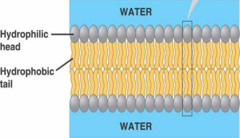
8088864282phospholipida lipid made up of glycerol joined to two fatty acids and a phosphate group. The hydrocarbon chains of the fatty acids act as nonpolar hydrophobic tails, while the rest of the molecule acts s a polar, hydrophilic head. They form bilayers that function as biological membrane.36
8088864283phospholipid bilayerfunction as membranes37
8088864284steroida type of lipid characterized by a carbon skeleton consisting of four fused rings with various chemical groups attached. Function as part of membranes or hormones.38
8088864285catalysta chemical agent that selectively increases the rate of a reaction without being consumed by the reaction.39
8088864286hydrophobica type of weak chemical interaction caused when molecules that do not mix with water coalesce to exclude water.40
8088864287disulfide bridgesa strong covalent bond formed when the sulfur of one cysteine monomer bonds to the sulfur of another cysteine monomer.41
8088864288polypeptidea polymer of many amino acids linked together by peptide bonds.42
8088864289nucleic acida polymer (polynucleotide) consisting of many nucleotide monomers; serves as a blueprint for proteins and, through the actions of proteins, for all cellular activities. the two types are DNA and RNA.43
8088864290nucleic acidfunctions as storage, transmission & use of genetic material44
8088864291nucleotidethe building block of a nucleic acid, consisting of a five-carbon sugar covalently bonded to a nitrogenous base and one or more phosphate groups.45
8088864292phosphodiester linkagebond between nucleotides in nucleotide chain to form polynucleotide46
8088864293polynucleotidea polymer consisting of many nucleotide monomers in a chain. The nucleotides can be those of DNA or RNA.47
8088864294pyrimidineone of two types of nitrogenous bases found in nucleotides, characterized by a six-membered ring. cytosine (c), thymine (T), and uracil (U)48
8088864295purinesone of two types of nitrogenous bases found in nucleotides, characterized by a six-membered ring fused to a five-membered ring. adenine (a) and guanine (G).49
8088864296RNAtransmission of information, consists of monomers with a ribose sugar and nitrogenous bases cytosine (C), guanine (G), adenine (A) & uracil (U). Single stranded.50
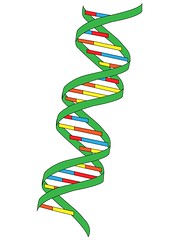
8088864297DNAa nucleic acid molecule, usually a double-stranded helix, in which each polynucleotide strand consists of nucleotide monomers with a deoxyribose sugar and the nitrogenous bases adenine (A), cytosine (C), guanine (G), and thymine (T); capable of being replicated and determining the inherited structure of a cell's proteins.51
8088864298deoxyribosethe sugar component of DNA nucleotides, having one fewer hydroxyl group than ribose, the sugar component of RNA nucleotides.52
8088864299ribosethe sugar component of RNA nucleotides.53
8088864300double helixthe form of native DNA, referring to its two adjacent antiparallel polynucleotide strands wound around an imaginary axis into a spiral shape.54
8088864301antiparallelreferring to the arrangement of the sugar-phosphate backbones in a DNA double helix (they run in opposite 5' -3' directions).55

Campbell AP Biology--CHAPTER 3 Flashcards

terms along with vital information covering Campbell's 6th edition Biology textbook

Terms : Hide Images
7300442994polar covalenttype of bond in water? Oxygen is more electronegative than hydrogen and the electrons of the polar bonds spend more time near oxygen thus, making oxygen more negativity charged and hydrogen more positively charged0
7300442996Cohesionholding a substance together1
7300442997Adhesionclinging of a substance to another2
7300442998Capillary actionthe attraction of the surface of a liquid to the surface of a solid, which causes the liquid to rise or fall Capillary action is the ability of a liquid to flow in narrow spaces without assistance. It occurs because of intermolecular forces between the liquid and surrounding solid surfaces. If the diameter of the tube is sufficiently small, then the combination of surface tension (which is caused by cohesion within the liquid) and adhesive forces between the liquid and container wall act to propel the liquid. When adhesion > cohesion, capillary action occurs.3
7300442999Surface TensionA measure of how difficult it is to break/stretch a surface4
7300443000Kinetic Energyenergy of motion5
7300443001Heattotal kinetic energy due to molecular motion6
7300443002Calorieamount of heat it takes to move 1 gram of substance 1 degree Celsius higher7
7300443003Temperatureintensity of heat due to average kinetic energy8
7300443004Specific heatamount of heat needed to be absorbed /lost to change the temperature by 1 degree Celsius water has a high _____.9
7300443005water1 calorie/1 gram/I degree Celsius is the specific heat of ____.10
7300443007Evaporative coolingremains of a liquid cool down11
7300443008vaporizationamount of heat needed to turn liquid into gas12
7300443009evaporationprocess of liquid becoming gas13
7300443012How does the density of water contribute to aquatic life?if ice sank, ponds/oceans/lakes would freeze solid, killing the life (during the summer only top would thaw) instead the floating ice insulates liquid water from below preventing it from freezing and killing animals14
7300443013solutionliquid completely homogeneous of two or more substances15
7300443014solventdissolving agent16
7300443015solutesubstance dissolved17
7300443016aqueous solutionwater is solvent18
7300443017hydration shellsphere of water molecules around dissolved ions19
7300443018hydrophobicwater hating substances20
7300534294hydrophilicwater loving substances21
7300443020molethe molecular weightof a substance expressed in grams (6.02 x 10^23)22
7300443021molarityconcentration measured by number of mols/liter of solution23
7300443022hydrogen ionH+24
7300443023hydroxide ionOH-25
7300443024hydronium ionH30+26
7300443025acidsincrease H+ concentration27
7300443026basesreduce H+ concentration28
7300443029pH scalemeasures concentration of H+ (scale from 1-14)29
7300443030bufferssubstance that minimizes changes in H+/OH- concentration30
7300443031acid precipitationpresence of sulfur oxides/nitrogen oxides and gaseous compounds react with air and goes into lakes, oceans, and soil, affecting animal life31

Pages

Subscribe to CourseNotes RSS

Need Help?

We hope your visit has been a productive one. If you're having any problems, or would like to give some feedback, we'd love to hear from you.

For general help, questions, and suggestions, try our dedicated support forums.

If you need to contact the Course-Notes.Org web experience team, please use our contact form.

Need Notes?

While we strive to provide the most comprehensive notes for as many high school textbooks as possible, there are certainly going to be some that we miss. Drop us a note and let us know which textbooks you need. Be sure to include which edition of the textbook you are using! If we see enough demand, we'll do whatever we can to get those notes up on the site for you!