AP Notes, Outlines, Study Guides, Vocabulary, Practice Exams and more!

AP Biology - Ecology Review Flashcards

Terms : Hide Images
5152869669ecologystudy of the distribution and abundance of organisms and their interactions with other organisms and with their physical environment0
5152869670populationgroup of individuals of the same species living in the same area1
5152869671communitygroup of populations of different species living in the same area2
5152869672ecosysteminterrelationships between organisms in a community and their physical environment3
5152869673biospherecomposed of all the regions of the earth that contain living things (hydrosphere, geosphere, and atmosphere)4
5152869674habitattype of place where an organism usually lives; descriptions typically include the organisms and the physical and chemical characteristics of the environment5
5152869675nicheall biotic and abiotic resources in the environment used by an organism6
5152869676bioticliving7
5152869677abioticnonliving8
5152869678climatelong-term prevailing weather conditions in a given area; major components include temperature, precipitation, sunlight, and wind9
5152869679macroclimateglobal, regional, or local climate example: changing angle of earth with respect to the sun, bodies of water, mountains that exert long-term effects10
5152869680microclimatefine-scale variations, like sunlight and temperature under a log11
5152869681biomelarge region of the earth whose distribution depends on the amount of precipitation and temperature in an area; characterized by dominant vegetation and animal life12
5152869682major biomes of the worldtropical rainforest, temperate grasslands, conifer forest (taiga), desert, temperate deciduous forest, tropical seasonal (dry) forest, tundra, savanna, chaparral, and aquatic biomes13
5152869683tropical rainforestabundant rainfall, stable temperature, high humidity most biodiversity of any biome14
5152869684desertlittle to no rainfall, greatly varying temperatures, no humidity plants are drought-resistant and animals are typically active only at night15
5152869685temperate grasslandscovers huge areas in temperate and tropical regions of the world low total annual rainfall, uneven seasonal rainfall, occasional fires grazing and burrowing mammals; soil is rich in nutrients and is great for agriculture16
5152869686temperate deciduous foresttrees drop their leaves in winter vertical stratification of plants and animals soil is rich due to decomposition17
5152869687conifer forest/taigadominated by conifer forests fresh water lakes and ponds very cold winters, heavy snowfall largest terrestrial biome large mammals flying insects and birds in summer18
5152869688tundracharacterized by permafrost "frozen desert" gently rolling plains with many lakes, ponds, and bogs insects are abundant large to medium mammals19
5152869689savannagrasses and some trees dominant herbivores include insects fire is a dominant abiotic factor plant growth increases during rainy season, but low otherwise20
5152869690chaparraldominated by dense, spiny, evergreen shrubs coastal areas with mild rainy winters and long, hot, dry summers plants are adapted to fires21
5152869691aquatic biomes include...freshwater, estuaries, marine22
5152869692primary way to distinguish aquatic biomessalinity23
5152869693vertical stratification in aquatic biomesphotic zone: enough light for photosynthesis aphotic zone: very little light benthic zone: bottom of biome with sand, detritus, and inorganic matter24
5152869694thermoclinenarrow layers of fast temperature change that separate a warm upper layer of water and cold deeper waters25
5152869695littoral zonein fresh, standing bodies of water, it is the well-lit shallow water near the shore that contains rooted and floating aquatic plants26
5152869696limnetic zonein fresh, standing bodies of water, it is the well-lit open surface waters farther from shore that are occupied by phytoplankton27
5152869697oligotrophic lakesdeep lakes that are nutrient-poor, oxygen-rich, and contain sparse phytoplankton28
5152869698eutrophic lakesshallower, higher-nutrient content, lower oxygen content, high concentration of phytoplankton29
5152869699primary way to characterize moving bodies of watercurrent30
5152869700marine biomelargest and most stable biome temperature varies little because of water's high heat capacity31
5152869701marine biome zonesintertidal zone: land meets water, as in tide pools neritic zone: beyond intertidal zone; shallower water over continental shelves pelagic zone: vast realm of open blue water coral reef: biome created by corals, varying in shape and support the growth of other organisms32
5152869702population ecologystudy of the growth, abundance, and distribution of populations33
5152869703population growth is described by...biotic potential, carrying capacity, and limiting factors34
5152869704population sizesymbolically represented by N it is the total number of individuals in the population35
5152869705population densitytotal number of individuals per area or volume occupied36
5152869706population dispersiondescribes how individuals in a population are distributed37
5152869707clumped dispersionmost common pattern, like humans in cities or schools of fish38
5152869708uniform dispersionlike trees in an orchard, or plants with toxins39
5152869709random dispersionlike trees in a forest; occurs because of special attractions or repulsions40
5152869710age structuredescribes the abundance of individuals of each age41
5152869711survivorship curvesdescribe how mortality of individuals in a species varies during their lifetimes42
5152869712type I survivorship curvedescribe a species in which most individuals survive to middle age; after that age, mortality is high. example: humans43
5152869713type II survivorship curvedescribe organisms in which the length of survivorship is random, that is, the likelihood of death is the same at any age example: rodents, invertebrates44
5152869714type III survivorship curvedescribe species in which most individuals die young, with only a relative few surviving to reproductive age and beyond example: oysters, species with free-swimming larvae45
5152869715biotic potentialmaximum growth rate of a population under ideal conditions with unlimited resources and without any growth restrictions46
5152869716factors that contribute to biotic potentialage at reproductive maturity, clutch size, frequency of reproduction, reproductive lifetime, survivorship of offspring to reproductive maturity47
5152869717carrying capacitymaximum number of individuals of a population that can be sustained by a particular habitat48
5152869718limiting factorselements that prevent a population from attaining its biotic potential49
5152869719types of limiting factorsdensity-dependent factors and density-independent factors50
5152869720density-dependent factorslimiting effect becomes more intense as the population density increases examples: parasites and disease, competition, toxic effect of waste products, predation, stress51
5152869721density-independent factorsoccur independently of the density of a population examples: natural disasters and climate extremes52
5152869722r-strategist (or r-selected species)rapid, exponential growth quickly invade a habitat, quickly reproduce, then die offspring are small, quickly maturing, and require little to no parental care53
5152869723k-strategist (or k-selected species)slower, logistic growth size of mature population remains relatively constant small number of large offspring extensive parental care reproduction repeats throughout lifetime54
5152869724exponential growthoccurs when reproductive rate is greater than zero; forms a J-shaped curve on a graph55
5152869725logistic growthoccurs when limiting factors restrict the size of a population to the carrying capacity of the habitat; forms an S-shaped curve on a graph56
5152869726life historydescribes an organism's strategy for maximum fitness57
5152869727reproductive successmeasure of fitness - how well an organism survives and reproduces58
5152869728reproductive success depends on four variablesage of reproductive maturity frequency of reproduction number of offspring per reproductive event how long the organism lives59
5152869729community ecologyconcerned with the interaction of different populations60
5152869730interspecific competitioncompetition between two different species via... - competitive exclusion principle (Gause's principle) - resource partitioning - realized niche - character displacement (niche shift)61
5152869731Competitive Exclusion (Gause's principle)when two species compete for exactly the same resources, or occupy the same niche, one is likely to be more successful62
5152869732resource partitioningsome species coexist in spite of apparent competition for the same resources. they actually occupy slightly different niches.63
5152869733fundamental nicheniche that an organism occupies in the absence of competition64
5152869734realized nichewhen competitors are present, one or both species may be able to coexist by occupying realized niches. here, any niche overlap is absent. they do not compete for the same resources.65
5152869735character displacementniche shift certain characteristics may enable individuals to obtain resources in their partitions more successfully. this reduces competition and leads to a divergence of features.66
5152869736predationpredator totally or partly consumes a plant or other animal67
5152869737true predatorkills and eats other animals68
5152869738parasitespends most or all of its live living on or in a host; obtains nourishment by feeding on host tissues69
5152869739parasitoidinsect that lays eggs on a host, usually an insect or spider, and after hatching the larvae consume the host70
5152869740herbivoreanimal that eats plants; some act like predators and totally consume the organism whereas others may only eat a part of the plant71
5152869741symbiosistwo species that live together in close contact during a portion or all of their lives72
5152869742types of symbiotic relationshipsmutualism commensalism parasitism73
5152869743mutualismboth species benefit74
5152869744commensalismone species benefits while the second is neither helped nor harmed75
5152869745parasitismparasite benefits while the host is harmed76
5152869746coevolutionevolution of one species in response to new adaptations that appear in another species - evolutionary arms race77
5152869747secondary compoundstoxic chemicals produced in plants that discourage would-be herbivores78
5152869748cryptic colorationcamouflage; any color, pattern, shape, or behavior that enables an animal to blend in with its surroundings79
5152869749aposematic colorationwarning coloration; conspicuous pattern or coloration of animals that warns predators that they sting, bite, taste bad, or are otherwise to be avoided80
5152869750mimicrytwo or more species resemble one another in appearance81
5152869751mullerian mimicryseveral animals, all with some special defense mechanism, share the same or similar coloration82
5152869752batesian mimicryan animal without any special defense mechanism mimics the coloration of an animal that does possess a defense83
5152869753ecological successionchange in the composition of species over time; one community is gradually and predictably replaced by another community84
5152869754climax communityfinal successional stage of constant species composition; persists relatively unchanged until destroyed by a catastrophic event, like fire85
5152869755in succession, resident species may alter...substrate texture, soil pH, soil water potential, light, and crowding86
5152869756pioneer speciesspecies that are the first to colonize a newly exposed habitat; work to break down rock into smaller rock, then into sand, and finally into soil as succession progresses87
5152869757primary successionoccurs where no soil was previously present; begins on rock. pioneer species and other plants break down rock into pebbles, then sand, then soil. as organisms die and decompose, it nourishes the soil allowing for more and larger organisms to grow or live in that area88
5152869758secondary successionoccurs as primary succession, except soil is already present89
5152869759food chainlinear flow chart of who eats whom example: grass >>> zebra >>> lion >>> vulture90
5152869760food webexpanded, more complete version of a food chain that shows all major plants in the ecosystem, various animals that eat them, and the animals that eat the animals91
5152869761autotrophsobtain energy from light or inorganic material92
5152869762heterotrophsconsumer other organisms for organic material and/or a source of energy93
5152869763ecological pyramidsshow relationships between trophic levels94
5152869764trophic levelan organism's place in a food chain or food web95
5152869765primary producersautotrophs that perform photosynthesis96
5152869766primary consumersherbivores, heterotrophs that eat primary producers97
5152869767secondary consumerscarnivores/omnivores, heterotrophs that eat primary consumers98
5152869768tertiary consumerscarnivores/omnivores, heterotrophs that eat secondary consumers99
5152869769quaternary consumerscarnivores/omnivores, heterotrophs that eat tertiary consumers100
5152869770detritivoresheterotrophs that obtain their energy by consuming dead plants and animals (detritus)101
5152869771why will you typically not see more than five levels in a food chain, pyramid, or web?only 10% of the energy at one trophic level is available for the next trophic level. 90% of the energy is used, stored, or lost. there's not enough energy in any ecosystem to support more than 5 levels. this is called ecological efficiency.102
5152869772primary productivityamount of organic matter produced through photosynthetic activity per unit of time103
5152869773dominant speciesmost abundant species or species that contributes the greatest biomass to a community104
5152869774keystone speciesone that has a strong influence on the health of a community or ecosystem; removal of a keystone species results in dramatic changes in the makeup of species that comprise other trophic levels105
5152869775invasive speciesintroduced species that proliferates and displaces native species because it is a better competitor or because its natural predators or pathogens are absent106
5152869776bottom-up model of trophic interactionsdescribes how changes in the structure of trophic levels are regulated by changes in the bottom level (plants)107
5152869777top-down model of trophic interactionschanges in the structure of trophic levels are regulated by changes in the top trophic level108
5152869778biodiversityfunction of the number of species, niches, and trophic levels in the ecosystem and the complexity of its food web109
5152869779factors that influence biodiversityclimate, latitude, habitat size and diversity, and elevation110
5152869780biogeochemical cyclesdescribe the flow of essential elements from the environment to living things and back; elements are stored in reservoirs and assimilated into organisms as well as released back into the environment111
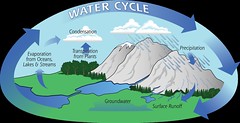
5152869781hydrologic cycle - reservoirsoceans, air (water vapor), ground water, glaciers112
5152869782hydrologic cycle - assimilationplants absorb water from soil, animals drink water or eat other organisms113
5152869783hydrologic cycle - releaseplants transpire, animals and plants decompose114
5152869784carbon cycle - reservoirsatmosphere, bodies of water, fossil fuels, peat, durable organic material115
5152869785carbon cycle - assimilationphotosynthesis, consumption116
5152869786carbon cycle - releaserespiration, decomposition, burning117
5152869787nitrogen cycle - reservoirsatmosphere, soil118
5152869788nitrogen cycle - assimilationabsorption, consumption, nitrogen fixation, nitrification119
5152869789nitrogen cycle - releasedenitrifying bacteria convert ammonia into atmospheric nitrogen, detritivorous bacteria convert organic compounds into ammonia, and animals excrete ammonia, urea, or uric acid120
5152869790phosphorus cycle - reservoirsrock and ocean sediments121
5152869791phosphorus cycle - assimilationplants absorb from soils, animals eat plants or other animals122
5152869792phosphorus cycle - releasedecomposition, excretion123
5152869793humans damage the biosphere by...exponential population growth habitat destruction pollution124
5152869794most destructive consequences of human activity include...global climate change, deforestation, acid rain, reduction in species diversity, ozone depletion, desertification, and pollution125
5152869795global climate changeBurning of fossil fuels releases greenhouse gases such as carbon dioxide into the atmosphere. These greenhouse gases trap infrared radiation, raising the temperature of the earth's atmosphere and resulting in large scale climate change.126
5152869796acid rainburning of fossil fuels like coal and other industrial processes release pollutants in the air, which react with water vapor to produce sulfuric acid and nitric acid, which rains down on us127
5152869797desertificationovergrazing of grasslands that border deserts transform those grasslands into deserts; agricultural output decreases and habitats available to native species are lost128
5152869798deforestationclear-cutting of forests causes erosion, flooding, and changes in weather patterns; occurs most often in the tropical rainforest, where most of our carbon fixation occurs129

AP Biology: Big Idea 2 Flashcards

Terms : Hide Images
7913356654entropyA measure of disorder or randomness.0
7913356655endergonic reactionReaction that absorbs free energy from its surroundings.1
7913356656exergonic reactionReaction that proceeds with a net release of free energy.2
7913356657ATP (adenosine triphosphate)Composed of a sugar ribose, nitrogenous base adenine, and a chain of three phosphate groups bonded to it.3
7913356658endothermicAnimals that are warmed mostly by heat generated by metabolism.4
7913356659ectothermicAnimals that gain heat mostly from external sources.5
7913356660homeostasis"Steady state" or "constant internal milieu".6
7913356661heterotrophOrganism that obtains energy from the foods it consumes.7
7913356662chemosynthesisProcess by which some organisms, such as certain bacteria, use chemical energy to produce carbohydrates.8
7913356663autotrophOrganism that can capture energy from sunlight or chemicals and use it to produce its own food from inorganic compounds.9
7913356664chlorophyllGreen pigment located within the chloroplasts.10
7913356665stomataMicroscopic pores in the leaf which lets carbon dioxide in and oxygen out. Also where water is lost.11
7913356666granaStack of thylakoids.12
7913356667stromaFluid inside the chloroplast where the Calvin Cycle happens.13
7913356668thylakoidFlattened membranes in the chloroplast where the light reactions take place.14
7913356669photosynthesis equationH2O + CO2 + sun -> C6H12O6 + O215
7913356670light reactionsPart of photosynthesis that involves light. ATP and NADPH are produced. Takes place on the thylakoid membrane.16
7913356671pigmentsMolecules that absorb, reflect, or transmit light.17
7913356672photosystemA cluster of pigments embedded into a thylakoid membrane (II then I).18
7913356673photolysisIn the thylakoid membranes of a chloroplast during light-dependant reactions, two molecules of water are split to form oxygen, hydrogen ions, and electrons.19
7913356674phosphorylationProcess of adding a phosphate group (i.e. what is done by ATP synthase to make ATP)20
7913356675carbon fixationThe initial incorporation of carbon into organic compounds.21
7913356676glyceraldehyde 3-phosphate (G3P)The intermediate molecule that will be eventually turned into glucose in the Calvin cycle22
7913356677RuBisCOenzyme involved in the first step of carbon-fixation; must abundant enzyme on Earth23
7913356678Calvin cycleCarbon fixation process in photosynthesis. Forms sugar and other organic compounds.24
7913356679chemiosmosisProcess by which protons are pumped into the thylakoid membrane. Protons passively flow through the ATP synthase, which leads to the synthesis of ATP.25
7913356680fermentationA partial degradation of sugars that occur without the use of oxygen (only glycolysis).26
7913356681cellular respirationWhen oxygen is consumed as a reactant along with the organic fuel.27
7913356682electron transport chainBreaks the fall of electrons to oxygen in several energy-releasing steps.28
7913356683glycolosisBreaking glucose into two molecules of a compound called pyruvate.29
7913356684Krebs cycleCompletes the breakdown of glucose by oxidizing a derivative of pyruvate to carbon dioxide.30
7913356685oxidative phosphorylationWhen energy is released at each step of the chain is stored in a form the mitochondrion can use to make ATP.31
7913356686ATP synthaseThe enzyme that make ATP from ADP and inorganic phosphate.32
7913356687anaerobic respirationOccurs by fermentation33
7913356688alcohol fermentationWhen pyruvate is converted to ethanol in 2 steps.34
7913356689lactic acid fermetationWhen pyruvate is reduced directly by NADH to form lactic as am end product, with no release of carbon dioxide.35
7913356690polarMolecule with partial charges. Mixes with water. (Hydrophilic)36
7913356691nonpolarNo partial charges. Do not mix with water. (Hydrophobic)37
7913356692cohesionWater molecules sticking to each other.38
7913356693adhesionWater molecules sticking to other surfaces.39
7913356694specific heatThe heat required to raise the temperature of one gram of a substance one degree centigrade.40
7913356695heat of vaporizationThe heat absorbed by a unit mass of a material at its boiling point in order to convert the material into a gas at the same temperature.41
7913356696evaporative coolingThe property of a liquid whereby the surface becomes cooler during evaporation, owing to a loss of highly kinetic molecules to the gaseous state.42
7913356697plasma membraneThe membrane at the boundary of every cell that acts as a selective barrier, thereby regulating the cell's chemical composition.43
7913356698diffusionWhen a substance moves from an area of higher concentration to an area of lower concentration. Due to entropy.44
7913356699osmosisThe diffusion of water through a selectively permeable membrane.45
7913356700passive transportTransport of a substance across a cell membrane by diffusion. Going with a concentration gradient.46
7913356701active transportWhen a cell gets materials or excretes them by using its own energy, usually through ATP; going against a concentration gradient.47
7913356702hypertonicDescribes a solution that has a greater concentration of total solute.48
7913356703hypotonicDescribes a solution that has a lesser concentration of total solute.49
7913356704isotonicDescribes solutions that have an equal concentration of total solutes.50
7913356705turgor pressureThe pressure inside of a cell as a cell pushes itself against the cell wall.51
7913356706water potentialThe physical property predicting the direction in which water will flow, governed by solute concentration and applied pressure.52
7913356707selective permeabilityA property of a plasma membrane that allows some substances to cross more easily than others.53
7913356708amphipathicMolecules are said to be this when it has regions that are both hydrophilic and hydrophobic.54
7913356709fluid mosaic modelStructural model of the plasma membrane where molecules are free to move sideways within a lipid bilayer.55
7913356710transmembrane proteinsIntegral proteins that span the membrane.56
7913356711glycolipidsMembrane carbohydrates that are covalently bonded to lipids.57
7913356712glycoproteinsMembrane carbohydrates that are covalently bonded to proteins.58
7913356713transport proteinA membrane protein that is responsible for moving hydrophilic substances from one side to the other.59
7913356714channel proteinA membrane protein, specifically a transport protein, that has a hydrophilic channel that certain molecules or atomic ions use as a tunnel.60
7913356715aquaporinA membrane protein, specifically a transport protein, that facilitates the passage of water through channel proteins.61
7913356716carrier proteinA membrane protein, specifically a transport protein, that holds onto molecules and changes their shapes in a way that shuttles them across the membrane.62
7913356717concentration gradientA difference in the concentration of a substance across a distance.63
7913356718osmoregulationThe control of water balance.64
7913356719facilitated diffusionPassive diffusion that is aided by transport proteins, but that does not require cellular energy.65
7913356720membrane potentialThe voltage of a plasma membrane.66
7913356721gated channelA protein channel in a cell membrane that opens or closes in response to a particular stimulus.67
7913356722phagocytosisProcess in which extensions of cytoplasm surround and engulf large particles and take them into the cell.68
7913356723endomembrane systemA network of membranes inside and around a eukaryotic cell, related either through direct physical contact or by the transfer of membranous vesicles.69
7913356724smooth ERSynthesis of lipids, phospholipids and steroid sex hormones, and helps detoxify drugs and toxins.70
7913356725rough ERA network of interconnected membranous sacs in a eukaryotic cell's cytoplasm; covered with ribosomes that make membrane proteins and secretory proteins.71
7913356726Golgi apparatusStack of membranes in the cell that modifies, sorts, and packages proteins from the endoplasmic reticulum.72
7913356727lysosomeA cell organelle that contains digestive enzymes.73
7913356728cell wallStrong layer around the cell membrane in plants, algae, and some bacteria.74
7913356729negative feedbackA type of regulation that responds to a change in conditions by initiating responses that will counteract the change. Maintains a steady state.75
7913356730positive feedbackA type of regulation that responds to a change in conditions by initiating responses that will amplify the change. Takes organism away from a steady state.76
7913356731thermoregulationProcess of maintaining an internal temperature within a tolerable range.77
7913356732kinesisA simple change in activity or turning rate in response to a stimuli.78
7913356733taxisAutomatic, oriented movement toward or away from some stimuli.79
7913356734innate immunityImmunity that is present before exposure and effective from birth. Responds to a broad range of pathogens.80
7913356735acquired immunityImmunity that is present only after exposure and is highly specific.81
7913356736lymphocytesWhite blood cells.82
7913356737antibodiesProtein that is produced by lymphocytes and that attaches to a specific antigen.83
7913356738inflammtory responseInnate response with the purpose of containing a site of damage, localizing the response, eliminating the invader and restore tissue function.84
7913356739histamineChemical stored in mast cells that triggers dilation and increased permeability of capillaries.85
7913356740antigenAny foreign molecule that is specifically recognized by lymphocytes and elicits an immune response.86
7913356741B lymphocytes (B cells)Lymphocyte that matures in the bone marrow and secretes antibodies.87
7913356742T lymphocytes (T cells)Lymphocyte that matures in the thymus and acts directly against antigens in cell-mediated immune responses.88
7913356743antigen presentationThe process by which an MHC molecule binds to a fragment of an intracellular protein antigen and carries it to the cell surface, where it is displayed and can be recognized by a T cell.89
7913356744memory cellsGeneral term for lymphocytes that are responsible for immunological memory and protective immunity.90
7913356745primary immune responseImmune response the first time the body is exposed to a particular antigen. Does not peak until 10-17 days after exposure.91
7913356746secondary immune responseImmune response after the body has already been exposed to a specific antigen. Response is faster, of greater magnitude, and more prolonged.92
7913356747humoral immune responseThe branch of acquired immunity that involves the activation of B cells and that leads to the production of antibodies.93
7913356748cell-mediated immune responseThe branch of acquired immunity that involves the activation of cytotoxic T cells, which defend against infected cells.94
7913356749helper T cellsActivate macrophages, B cells and T cells.95
7913356750cytotoxic T cells or "killer T cells"T cells that directly attack infecting organisms; these cells attack antigen labeled foreign or host tissue.96
7913356751density-dependent inhibitionThe phenomenon observed in normal animal cells that causes them to stop dividing when they come into contact with one another.97
7913356752mutualismSymbiotic relationship in which both species benefit from the relationship.98
7913356753commensalismSymbiotic relationship in which one member of the association benefits and the other is neither helped nor harmed.99
7913356754parasitismSymbiotic relationship in which one organism lives in or on another organism, called the host, and consequently harms it.100
7913356755pathogenAn organism that causes disease.101
7913356756invasive speciesSpecies introduced to new areas that often disrupt the indigenous communities.102
7913356757macrophageA phagocytic cell present in many tissues that functions in both specific and nonspecific immunity.103
7913356758cell differentiationThe process by which a cell becomes specialized for a specific structure or function.104
7913356759zygoteDiploid cell resulting from the union of a haploid egg and a haploid sperm.105
7913356760apoptosisProgrammed cell death.106
7913356761totipotent stem cellsStem cell that can divide and become a full organism (i.e. the zygote)107
7913356762pluripotent stem cellsstem cell that can become any type of cell in an organism, but cannot actually divide into the full organism itself108
7913356763multipotent stem cellsstem cell that can become just a few different types (organ stem cells)109
7913356764homeotic (hox) genesgenes that control the general body blueprint of an organism; highly conserved through evolution110

Campbell AP Biology--CHAPTER 11 Flashcards

Terms : Hide Images
8776281979signal transduction pathwaya series of steps linking a mechanical or chemical stimulus to a specific cellular response0
8776281980cell junctionsallows molecules to pass readily between adjacent cells1
8776281981cell-cell recognitiontwo cells in an animal may communicate by interaction between molecules protruding from their surfaces2
8776281982paracrine signaling(local) a secreting cell acts on nearby target cells by discharging molecules of a local regulator3
8776281983synaptic signaling(local) a nerve cell releases neurotransmitter molecules into a synapse, stimulating the target cell4
8776281984hormonal signalingspecialized endocrine cells secrete hormones into body fluids, often the blood5
8776281985hormonesin multicellular organisms, one of many types of secreted chemicals that are formed in specialized cells, travel in body fluids, and act on specific target cells in other parts of the body to change their functioning6
8776281986reception7
8776281987transduction8
8776281988response9
8776281989liganda signal molecule that binds specifically to another molecule, usually a larger one10
8776281990g protein-coupled receptora signal receptor protein in the plasma membrane that responds to the binding of a signaling molecule by activating a G protein11
8776281991g proteina GTP-binding protein that relays signals from a plasma membrane signal receptor, known as a G protein-coupled receptor, to other signal transduction proteins inside the cell12
8776281992receptor tyrosine kinasesa receptor protein in the plasma membrane, the intracellular part of which can catalyze the transfer of a phosphate group from ATP to a tyrosine on another protein13
8776281993ligand-gated ion channel14
8776281994intracellular receptor15
8776281995protein kinasean enzyme that transfers phosphate groups from ATP to a protein, thus phosphorylating the protein16
8776281996protein phosphatasesan enzyme that removes phosphate groups from (dephosphorylates) proteins, often functioning to reverse the effect of a protein kinase17
8776281997phosphorylation cascade18
8776281998second messengersa small, nonprotein, water-soluble molecule or ion, such as a calcium ion (Ca2+) or cyclic AMP, that relays a signal to a cell's interior in response to a signaling molecule bound by a signal receptor protein19
8776281999cyclic ampcyclic adenosine monophosphate, a ring-shaped molecule made from ATP that is a common intracellular signaling molecule (second messenger) in eukaryotic cells; also a regulator of some bacterial operons20
8776282000adenylyl cyclasean enzyme that converts ATP to cyclic AMP in response to a signal21
8776282001the specificity of cell signaling22
8776282002apoptosisa program of controlled cell suicide, which is brought about by signals that trigger the activation of a cascade of suicide proteins in the cell destined to die23

AP Biology Quarter 1 Review Flashcards

Terms : Hide Images
7879583273explain the difference between organic and inorganic moleculesorganic contain both carbon and hydrogen. inorganic contain other elements0
7879583274building blocks of carbs, lipids, proteins, and nucleic acidsmonosaccharides, 3 fatty acids and a glycerol, amino acids, and a nucleotide1
7879583275bond created between carbs, lipids, proteins and nucleic acidsglycosidic linkage, ester linkage, peptide bonds, and hydrogen bonds2
7879583276an example of carbs, lipids, proteins and nucleic acidsstarch, fat, transport, and DNA3
7879583277explain how the chemical reactions dehydration synthesis and hydrolysis are involved in the creation and destruction of macromoleculesdehydration synthesis- 2 monomers are connected by the loss of a water molecule hydrolysis- 2 monomers are disconnected by the addition of a water molecule4
7879583279amino acidhas an amine group on one side which is 2 hydrogens connected with a nitrogen and on the other side it has a carboxyl group which is a carbon double bonded to a oxygen and a single bonded -OH with an R side chain (varies)5
7879583280fatty acida long carbon skeleton connected to a carboxyl group at the end6
7879583281phosphate groupphosphate bonded with 2 oxygens (one with a double bond) and 2 -OHs7
7879583284chemical properties of amino acidchanges in the side chain (R) can result in a change in job specification (affects its role in a polypeptide)8
7879583285chemical properties of fatty acidssaturated includes only single bonds which are solid and have no kinks, whereas unsaturated contain at least one double bond which are liquid and have at least one kink9
7879583286chemical properties of phosphate groupscontributes to the negativity of whatever particle it is attached to, when attached to a molecule they have the potential to react with water10
7879583287describe the structure and chemical properties of phosopholipidsstructure: polar, hydrophillic head and nonpolar, hydrophobic tails and diversity is based on the differences in the fatty acid tails chemical: hydroplillic "water loving" and hydrophobic "fear of water" together phospholipids are amphipathic11
7879583288structure and functional properties of saturated fatty acid tailstructure: contains only single bonds with lipid structure and a phosphate group functional: packed tightly forming a solid12
7879583289structure and functional properties of unsaturated fatty acid tailstructure: contains at least one double bond with lipid structure and a phosphate group functional: loosely packed forming a liquid13
7879583290structural differences between DNA and RNADNA: double helix, ATCG RNA: single helix, AUCG (smaller for transport)14
7879583291primary structure-linear chain of amino acids -in a specific sequence -determined by DNA -dictates secondary and tertiary structures (R chains cause reactions with eachother) -peptide bonds15
7879583292secondary structure-folds and coils of polypeptide chain repeatedly contribute to overall shape -a helix or b pleated sheets -hydrogen bonds16
7879583293tertiary structure-3D shape -shaped by interactions between R side chain - bonds include Hydrogen bonds Ionic bonds Van der Waals-weak Disulfide bridges17
7879583294quaternary structure-multiple polypeptide chain folded together forming a protein example: collagen or hemoglobin18
7879583299what is the function of an enzyme and what does it do to complete its function?-a protein macromolecule that acts as a catalyst -speeds up metabolic reactions by lowering the activation energy barrier -allows the reactants to absorb enough energy to react at room temperature19
7879583300list factors that affect enzyme activity and for each be sure to explain how they affect the enzyme-temperature (substrates collide more frequently under higher temperatures) -pH -optimal20
7879583303compare and contrast prokaryotic and eukaryotic cells-prokaryotic- DNA found in nucleoid -DNA is circular with 1 chromosome -evolved before eukaryotic -simple -plasma membrane, cell wall, flaggellum, nucleoid, ribosomes, capsule, and cytosol -lack membrane-bound organelles -small -eukaryotic-DNA in nucleus (double membrane) -linear chromosomes -membrane bound organelles -larger similarities:-interior cytoplasm -plasma membrane -cell walls (plants only for eukaryotic) -chromosomes, DNA, and ribosomes -cytoskeleton21
7879583304tell the function of lysosomefunctions:-breaks down macromolecules and digests worn out cell components22
7879583305tell the structure and function of ERstructure: -folded flattened function: -(smooth) manufacture of carbs and lipids -(rough) protein synthesis23
7879583306tell the structure and function of golgi bodiesstructure: -flattened sacs (pita bread) function: -collects, packages, and distributes molecules manufactured in the cell24
7879583307tell the structure and function of ribosomestructure: -small sphere function: -site of protein synthesis25
7879583308tell the structure and function of vacuolestructure: -sac function: -isolate materials -containers26
7879583309tell the structure and function of nucleusstructure: -large sphere function: -command center27
7879583310tell the structure and function of mitochondriastructure: -bacteria shaped function: -cellular respiration -create ATP28
7879583311tell the structure and function of peroxisomestructure: -sac function: -contains enzymes that carry out particular reactions like detox29
7879583312tell the structure and function of nucleolusstructure: -small dense sphere function: -site of ribosome synthesis30
7879583314list structures found in animal cells that arent found in plants cellscentrosomes, lysosomes, centrioles31
7879583316structure and function of the cell membranestructure: -fluid mosaic model: fluid is the phospholipids and the mosaic pieces are proteins, carbs, cholesterols, oligosaccharides, glycolipids, and glycoproteins function: -integral proteins: channel and carrier -peripheral proteins: structural shape to the plasma membrane -cholesterol: increases membrane fluidity during cold -oligosaccharides and carbohydrates: cell-cell recognition -glycolipids and glycoproteins: proteins with attachments for cell-cell recognition32
7879583317water potential(water potential=solute potential+pressure potential) -determines the direction of water movement -affected by solute and pressure potential33
7879583318solute potential(solute potential= -iCRT) -proportional to the osmolarity of a solution -can be either 0 or negative34
7879583319pressure potential-physical pressure on a solution -negative sucks -positive presses35
7879583320hypertonic solution-the solution with more solute -sucks liquid from comparative solution -cell loses water -salt h2036
7879583321hypotonic solution-the solution with less solute -adds liquid to comparative solution -cell takes in more water -pure water37
7879583322isotonic-same solute concentration -no change -saline38
7879583323why does water move from hypotonic to hypertonic?-water moves towards areas of higher solute concentration39
7879583324exocytosis-cell secretes certain biological molecules by the fusion of vesicles with the plasma membrane40
7879583325endocytosis-liquids or are taken up by the cellthrough invagination of the plasma membrane41
78795833263 types of endoctyosis-phagocytosis: cell engulfs particle through wrapping pseudopodia around it, in a vacuole -pinocytosis: cell gulps droplets of extracellular fluid into tiny vesicles -receptor-mediated: cell may acquire bulk quantities of specific substances, even though substances may not be very concentrated in extracellular fluid42
7879583327bulk transport-endocytosis and exocytosis43

AP Biology: Chapter 14 (heredity) Flashcards

Mendel and the Gene Idea

Terms : Hide Images
8525506785traitgenetically determined variant of a characteristic0
8525506786P generationparental generation, the first two individuals that mate in a genetic cross1
8525506787F1 generationthe first generation of offspring obtained from an experimental cross of two organisms2
8525506788F2 generationthe second generation of offspring, obtained from an experimental cross of two organisms; the offspring of the F1 generation3
8525506789allelesdifferent forms of a gene4
8525506790dominantobserved trait of an organism that masks the recessive form of a trait5
8525506791recessiveThe inherited characteristic often masked by the dominant characteristic and not seen in an organism.6
8525506792law of segregationfirst law of heredity stating that pairs of alleles for a trait separate when gametes are formed7
8525506793Punnett squareA chart that shows all the possible combinations of alleles that can result from a genetic cross8
8525506794homozygoushaving two identical alleles for a trait9
8525506795heterozygoushaving two different alleles for a trait10
8525506796genotypethe particular alleles at specified loci present in an organism11
8525506797phenotypephysical characteristics of an organism12
8525506798test crossthe crossing of an individual of unknown genotype with a homozygous recessive individual to determine the unknown genotype13
8525506799monohybrid crossa cross between individuals that involves one pair of contrasting traits14
8525506800dihybrid crossa cross between individuals that have different alleles for the same gene15
8525506801law of independent assortmentthe law that states that genes separate independently of one another in meiosis16
8525506802multiplication ruleThe rule that states that to determine the probability, we multiply the probability of one event by the probability of another17
8525506803addition rulethe probability that any one of two or more mutually exclusive events will occur is calculated by adding together their individual probabilities18
8525506804complete dominancea relationship in which one allele is completely dominant over another19
8525506805incomplete dominancecreates a blended phenotype; one allele is not completely dominant over the other20
8525506806codominancea condition in which both alleles for a gene are fully expressed21
8525506807Tay-Sachs diseaseA human genetic disease caused by a recessive allele for a dysfunctional enzyme, leading to accumulation of certain lipids in the brain. Seizures, blindness, and degeneration of motor and mental performance usually become manifest a few months after birth.22
8525506808epistasisthe suppression of a gene by the effect of an unrelated gene23
8525506809pleiotropyA single gene having multiple effects on an individuals phenotype24
8525506810polygenic inheritanceAn additive effect of two or more gene loci on a single phenotypic character.25
8525506811pedigreea diagram that shows the occurrence of a genetic trait in several generations of a family26
8525506812carriersindividuals who have one copy of a recessive autosomal allele27
8525506813Cystic Fibrosisa human genetic disorder caused by a recessive allele for a chloride channel protein; (4% whites are carriers - most common lethal genetic disease)28
8525506814Sickle cell anemiaa genetic disorder in which erythroctyes take on an abnormal curved or "sickle" shape29
8525506815Huntington's diseasea degenerative disease of the nervous system caused by a lethal dominant allele that has no obvious phenotypic effect until the individual is 35-45 yrs old30
8525506816amniocentesisA technique for determining genetic abnormalities in a fetus by the presence of certain chemicals or defective fetal cells in the amniotic fluid, obtained by aspiration from a needle inserted into the uterus.31
8525506817chorionic villus samplingsampling of placental tissue for microscopic and chemical examination to detect fetal abnormalities32

AP Biology Chapter 7 Vocabulary Flashcards

Terms : Hide Images
6812089364phagocytosisone cell engulfs a smaller organism and creates a vacuole0
6812089380peripheral proteinsloosely bound to surface of membrane or integral protein and receive chemical signals1
6812089381glycolipidscarbohydrate chain attached to a lipid and used for cell-cell recognition2
6812089382transport proteinsproteins that allow substances that can't diffuse across the membrane, to cross3
6812089383aquaporinschannel protein for water4
6812089384gated channelsfacilitated diffusion, has a hydrophilic channel, only transports one substance5
6812089385passive transportdiffusion of substance across membrane with the concentration gradient without the use of energy6
6812089386osmosisdiffusion of free water across a selectively permeable membrane7
6812089387tonicityability of a surounding solution to cause a cell to lose or gain water8
6812089388isotonicsolution and cell have same concentration9
6812089389hypertonicsolution is more concentrated than cell so cell loses water10
6812089390hypotonicsolution is less concentrated than cell so water enters cell and it explodes11
6812089391osmoregulationcontrols solute concentrations and water balance12
6812089392turgidcell in hypotonic solution makes cell swell a little and become very firm (healthy in many plants)13
6812089393flaccidplants' cells and surroundings are isotonic so there is no water movement14
6812089394plasmolysiscell in a hypertonic solution loses water, pulls away from cell wall, and shrivels15
6812089395facilitated diffusiondiffusion of polar, hydrophilic molecules through a protein w/o energy16
6812089396diffusiondiffusion of nonpolar, hydrophobic molecules across membrane17
6812089397active transportdiffusion against concentration gradient through a protein pump from low to high concentration with the use of energy.18
6812089398sodium potassium pumpactive transport where for every three Na+ ions thrown out of cell, two K+ ions are brought in19
6812089399unsaturated hydrocarbon tails in a membrane...prevent packing of phospholipids and causes fluidity which allows more flexibility(good)20
6812089400saturated hydrocarbon tails in a membrane...pack together and increase viscosity making membrane too rigid (bad)21
6812089401proton pumpactively transports H+ ions out of the cell22
6812089402exocytosiscell secretes molecules by fusing vesicle with membrane23
6812089403endocytosiscell takes in large molecules by forming new vesicles out of the membrane24
6812089406membrane potentialvoltage across a membrane25
6812089407pinocytosiscells pinch in small vesicles, bringing in membrane and extracellular fluids26
6812089409electrochemical gradientmight accentuate or negate concentration of gradient27
6812089413water potentialhow likely water is to move from one location to another, is mathematically the sum of pressure potential and solute potential28
6812416480glycoproteinsmembrane proteins attached to carbohydrate chains that are used for cell-cell recognition29
6812436823integral proteinsTypically transmembrane proteins with hydrophobic regions that completely span the hydrophobic interior of the membrane.30
6812496871amphipathicMolecules are said to be this when it has regions that are both hydrophilic and hydrophobic.31
6812499378concentration gradientA difference in the concentration of a substance across a distance.32
6812501790cotransportThe coupling of the "downhill" diffusion of one substance to the "uphill" transport of another against its own concentration gradient.33
6812504275electrogenic pumpA transport protein that generates voltage across a membrane, causing a net separation in charge.34
6812508859fluid mosaic modelThe currently accepted model of cell membrane structure, which envisions the membrane as a mosaic of individually inserted protein molecules drifting laterally in a fluid bilayer of phospholipids.35
6812512768ion channelschannel proteins that transport ions36
6812514261ligandAny molecule that bonds specifically to a receptor site of another molecule.37
6812523911receptor mediated endocytosisThe movement of specific molecules into a cell by the inward budding of membranous vesicles containing proteins with receptor sites specific to the molecules being taken in; enables a cell to acquire bulk quantities of specific substances.38
6812527206selective permeabilityA property of a plasma membrane that allows some substances to cross more easily than others.39

AP Biology Chapter 16 Vocabulary Flashcards

Campbell AP Biology Chapter 16

Terms : Hide Images
6815212082BacteriophagesBacteria- infecting viruses0
6815212083Double helixTwisted shape of DNA1
6815212084Semi conservative modelEarly model of DNA replication2
6815212085Origins of replicationWhere DNA begins to replicate3
6815212086Replication forkY- shaped region where DNA unzips4
6815212087HelicasesEnzymes that untwist DNA5
6815212088Single strand binding proteinsstabilize single strands of DNA6
6815212089TopoisomeraseBreaks, swells, and rejoins DNA strands7
6815212090PrimerRNA chain that starts replication8
6815212091PrimaseEnzyme that synthesizes primers9
6815212092DNA polymerasesEnzymes that catalyze the replication of DNA10
6815212093Leading strandNew DNA strand11
6815212094Okazaki fragmentsSegments of the lagging strand12
6815212095DNA ligaseTurns the fragments into DNA strands13
6815212096Mismatch repairEnzymes automatically correct DNA errors14
6815212097NucleaseDamaged segment of DNA strand15
6815212098Nucleotide excision repairRepairs DNA16
6815212099TelomeresDNA at the tips of chromosomes17
6815212100TelomeraseAn enzyme that catalyzes the lengthening of telomeres18
6815212101NucleoidA dense region of DNA in a prokaryotic cell19
6815212102ChromatinDNA and protein that makes up chromosomes20
6815212103HeterochromatinDNA that is densely packed around histones; the genes in heterochromatin are generally inaccessible to enzymes and are turned off21
6815212104EuchromatinThe less condensed form of eukaryotic chromatin that is available for transcription22
6815212105DNA replicationthe process of making a copy of the DNA23
6815212106Histonesthe proteins in eukaryotic chromosomes used for packaging DNA24
6815212107Lagging strandDNA being elongated away from the replication fork discontinuously in Okazaki fragments25
6815212108Nucleotidesubunit of DNA made of deoxyribose, phosphate, and nitrogenous base26
6815212109Nucleosomebasic unit of DNA packing27
6815212110Transformationthe uptake of DNA from the environment ny a prokaryote28
6815212111Virus"An infectious particle composed of a protein capsule and a nucleic acid core, which is dependent on a host organism for replication"29
6815212145A Site (aminoacyl-tRNA site)holds tRNA carrying next AA to be added in chain30
6815212146E Site (exit site)where discharged tRNAs leave ribosome31
6815212147Polyribosomes-strings of ribosomes trailing along mRNA -enables cells to make many copies of polypeptide quickly32
6815212148Signal Peptide-targets protein to ER -marks if polypeptide of proteins destined for endomembrane system or for secretion33
6815212149Signal Recognition Particle (SRP)brings ribosome to receptor protein into ER membrane34
6815212150Signal Mechanism for Targeting Proteins to ER1. polypeptide synthesis begins on free ribosome in cytosol 2. SRP binds to signal peptide, halting synthesis momentarily 3. SRP binds to receptor proteins in ER membrane (receptor is part of protein complex w/ membrane and signal cleaving enzyme) 4. SRP leaves, and polypeptide synthesis resumes w/ simultaneous translocation across membrane (signal peptide stays attached to translocation complex) 5. signal cleaving enzyme cuts off signal peptide 6. rest of complexed polypeptide leaves ribosome and folds into final conformation35
6815212151Mutations-change into genetic information of cell -responsible for huge diversity of genes found along organisms36
6815212152Point Mutations-chemical changes in a single base pair of a gene -if occurs in a gamete, can be transmitted to offspring and future generations37
6815212153Missense Mutations-change one amino acid to another -new amino acid may have properties similar to replaced amino acid, or may be in region where exact sequence of amino acids not essential to proteins functions38
6815212154Nonsense Mutation-change codon for amino acid into stop codon -causes translation to be terminated prematurely -resulting polypeptide shorter than polypeptide encoded by normal gene39
6815212155Insertionsadditions of nucleotide pairs in gene40
6815212156Deletionlosses of nucleotide pairs in gene41
6815212157Frameshift Mutations-# nucleotides inserted/deleted NOT multiple of 3 -may alter reading frame of genetic message42
6815212158Mutagenphysical and chemical agents that interact w/ DNA that cause mutations43
6815212159rRNAmakes up 60% of the ribosome; site of protein synthesis44
6815212160RNAiInterference RNA45
6815212161ribozymeRNA molecule that functions as an enzyme46
6815212162substitutionwhen one base is place where another belongs, a C replaces an A47
6815212163silent mutationa mutation that occurs in a noncoding region of the chromosome48

AP Biology Evolution/Selection/Evidence Flashcards

Terms : Hide Images
9463921997homologous structuresstructures in different species that are similar because of common ancestry0
9463921998vestigial structuresremnants of features that served important functions in the the organism's ancestors1
9463921999convergent evolutionthe independent evolution of similar features in different lineages2
9463922000Hardy-Weinbergthe frequencies of alleles and genotypes in a population will remain constant from generation to generation, provided that only Mendelian segregation and recombination of alleles are at work3
9463922001gene poolthe aggregate of all of the alleles for all of the loci in individuals in a population4
9463922002populationa group of individuals of the same species that live in the same area and interbreed, producing fertile offspring5
9463922003natural selectiona process in which organisms with certain inherited characteristics are more likely to survive and reproduce than are organisms with other characteristics6
9463922004genetic driftchanges in the gene pool due to random events7
9463922005founder effectwhen a individuals become isolated from a larger population, this smaller group may establish a new population whose gene pool differs from the source population8
9463922006bottleneck effectwhen there is a severe drop in population size, certain alleles may be overrepresented among the survivors, others may be underrepresented, and some may be absent altogether9
9463922007gene flowthe transfer of alleles into or out of a population due to the movement of fertile individuals or their gametes10
9463922008directional selectionwhen conditions favor individuals exhibiting one extreme of a phenotypic range, thereby shifting the frequency curve for the phenotypic character in one direction or the other11
9463922009disruptive selectionwhen conditions favor individuals at both extremes of a phenotypic range over individuals with intermediate phenotypes12
9463922010stabilizing selectionacts against both extreme phenotypes and favors intermediate variants13
9463922011sexual selectiona form of natural selection in which individuals with certain inherited characteristics are more likely than other individuals to obtain mates14
9463922014heterozygote advantagewhen individuals who are heterozygous at a particular locus have greater fitness than do both kind of homozygous15
9463922016speciationthe process by which one species splits into two or more species16
9463922019speciesa group of populations whose members have the potential to interbreed in nature and produce viable, fertile offspring- but do not produce viable, fertile offspring with members of other such groups17
9463922020reproductive isolationthe existance of biological barriers that impede members of two species from producing viable offspring18
9463922021hybridsoffspring that result from interspecific mating19
9463922045Darwin's Theory (five parts)1. Variation 2. Overproduction 3. Competition 4. Survival of the fittest 5. Overtime, emergence of new species (new alleles)20
9658456943BiogeographyThe study of where patterns in organisms occur geographically. Can suggest relatedness between organisms.21
9658460891Radiometric datingAn exact measure of the age of a fossil measured by the amount of radioactive elements in rock22
9658467086Relative DatingThe comparison of fossils in layers of rock to determine relative age23
9658474537Large population sizeRequired for Hardy-Weinberg equilibrium, ensures that genetic drift is less likely to happen24
9658479031MigrationMovement of organisms and alleles from one population to another25
9658484470p + q = 1Part of Hardy Weinberg equilibrium, shows the allele frequencies in a popualtion26
9658491800p² + 2pq + q² = 1Part of Hardy Weinberg equilibrium, shows the genotype frequencies in a population27

GWHS AP Biology - Chapter 27: Bacteria Flashcards

Terms : Hide Images
8911353384peptidoglycanA polymer composed of modified sugars cross-linked by short polypeptides. This molecular fabric encloses the entire bacterium and anchors other molecules that extend from its surface.0
8911353385Gram stainA technique that allows scientists to categorize many bacterial species according to differences in cell wall composition.1
8911353386Gram-positiveThese bacteria tend to have simpler walls with a relatively large amount of peptidoglycan.2
8911353387Gram-negativeThese bacteria tend to have less peptidoglycan, are more structurally complex, with an outer membrane that contains lipopolysaccharides (carbohydrates bonded to lipids).3
8911353388capsuleA dense and well-defined sticky layer of polysaccharide or protein that surrounds the cell wall of many prokaryotes.4
8911353390fimbriaehair-like appendages that allow prokaryotes to stick to their substrate or to one another.5
8911353391piliAppendages that pull two cells together prior to DNA transfer from one cell to the other; tend to be longer and less numerous than fimbriae.6
8911353393nucleoidA region of cytoplasm containing the prokaryote's genetic material; not enclosed by a membrane.7
8911353394plasmidsSmaller rings of independently replicating DNA molecules that only carry a few genes, found in prokaryotic cells, in addition to its single chromosome.8
8911353395transformationThe genotype and possibly phenotype of a prokaryotic cell are altered by the uptake of foreign DNA from its surroundings.9
8911353396transductionPhages carry prokaryotic genes from one host cell to another.10
8911353397conjugationDNA is transferred between two prokaryotic cells (usually of the same species) that are temporarily joined. In bacteria, the DNA transfer is always one-way: One cell donates the DNA, and the other receives it.11

AP Biology: Chapter 55 (ecosystems) Flashcards

Terms : Hide Images
9818487853EcosystemThe sum of all the organisms living in a given area and the abiotic factors with which they interact (varying sizes of areas)0
9818487854Energy flow in ecosystemsEnters as sunlight, goes to autotrophs, dispersed among heterotrophs1
9818487855TransformWhat do cells do to matter and energy?2
9818487856Law of Conservation of MassMatter cannot be created or destroyed, only transformed3
9818487857Primary producerTrophic level that supports all others (Autotroph)4
9818487858Primary consumerHerbivore that eats the primary producers (Heterotroph)5
9818487859Secondary consumerCarnivores that eat herbivores6
9818487860Tertiary consumerCarnivores that eat other carnivores7
9818487861DetrivoresGet nutrients from nonliving organic material (dead organisms, fallen leaves)8
9818487862Primary production of an ecosystemThe amount of light energy converted to chemical energy by autotrophs in the form of organic compounds9
9818487863Gross Primary Production (GPP)Total primary production in an ecosystem-- the amount of energy from light converted the chemical energy or organic molecules per unit time10
9818487864Net Primary Production (NPP)Gross primary production minus the energy used by the primary producers for their "autotrophic respiration" (Usually half of GPP on average) (Expressed as energy per unit area per unit time)11
9818487865Limiting nutrientThe element that must be added for production to increase (Usually Nitrogen or Phosphorous--sometimes iron)12
9818487866Secondary ProductionThe amount of chemical energy in consumers' food that is converted to their own new biomass during a given period13
9818487867Energy production efficiencyPercentage of energy stored in assimilated food that is not used for respiration14
9818487868Assimilation of primary productionConsists of total energy taken in used for growth, reproduction, and respiration (not including losses in feces)15
9818487869Trophic efficiencyPercentage of production transferred from one trophic level to the next (generally only about 10% and range from 5-20% (90% of the energy in one trophic level is typically not transferred to the next)16
9818487870Pyramid of Net productionDemonstrates the loss of energy with each transfer in a food chain, trophic levels are arranged in tiers where the width of each trophic level is proportional to the net production in Joules17
9818487871Biomass pyramidRepresents ecological consequences of low trophic efficiencies, each tier represents the standing crop (total dry mass of all oragnisms) in one trophic level18
9818487872Carbon cycleCO2 -> Photosythesis -> Cellular respiration19
9818487873Nitrogen cycleN2 -> N fixation -> Organisms -> Denitrification20
9818487874The water cycleEvaporation, Condensation, Precipitation21
9818487875Phosphorous cycleWeathering of rocks adds phosphorous to soil, some leaches into groundwater and surface water and may eventually reach the sea, producers take in phosphates, consumers eat producers, phosphate is returned to soil or water (Phosphorous never goes into the atmosphere)22

Pages

Subscribe to CourseNotes RSS

Need Help?

We hope your visit has been a productive one. If you're having any problems, or would like to give some feedback, we'd love to hear from you.

For general help, questions, and suggestions, try our dedicated support forums.

If you need to contact the Course-Notes.Org web experience team, please use our contact form.

Need Notes?

While we strive to provide the most comprehensive notes for as many high school textbooks as possible, there are certainly going to be some that we miss. Drop us a note and let us know which textbooks you need. Be sure to include which edition of the textbook you are using! If we see enough demand, we'll do whatever we can to get those notes up on the site for you!