AP Notes, Outlines, Study Guides, Vocabulary, Practice Exams and more!

Sport Promotion Flashcards

Terms : Hide Images
3056729878Who did I say was the most important stakeholder in a company?Manager0
3056730356Competitive advantage is attained through the measurement of three types of behavior that are linked to value generations. What are the three behaviors?- Loyalty - Cooperation - Advocacy1
3056731472What are leading and lagging indicators? How do they connect to attitudes and behaviors?- Leading Indicator: A measurable economic factor that changes before the economy starts to follow a particular pattern or trend. Leading indicators are used to predict changes in the economy, but are not always accurate. - Lagging Indicators: A measurable economic factor that changes after the economy has already begun to follow a particular pattern or trend.2
3056732305According to Marketo- What are the five stages of accountability?- Denial - Fear - Confusion - Self-Promotion - Accountability3
3056732813According to Marketo - what are the three things you should do to planning for marketing ROI?- Establish targets and ROI estimates up-front - Designing programs to be measurable - Focusing on the decisions that will improve marketing4
3056734125According to Marketo - where are the five areas where metrics go wrong?- Vanity Metrics - Measuring what is easy - Focusing on quantity not quality - Activity, not results - Efficiency instead of effectiveness5
3056734644In the study I conducted of management professionals and presented in class - what was the number one skill that marketers look for today in new graduates?listening6
3056737452According to Sargut and McGrath - Explain the key areas for mitigating risk.- Limit or even eliminate the need for accurate predictions - Use decoupling or redundancy - Draw on storytelling and counterfactuals - Triangulate7
3056738151McAfee and Brynjolfsson talk about how the big three Vs have triggered a revolutionVolume (The amount of data that is collected), Velocity (the speed of data creation), Variety (where we can retrieve this data is endless. Ex. Purchasing, GPS, personal, social media...)8
3056738402Please apply Spradline's Problem Definition process.- Establish the need for a solution (What is the basic need? What is the desired outcome? Who stands to benefit and why?) - Justify the need (Is the effort aligned with our strategy? What ate the desired benefits for the company? How will we measure them? How will we ensure that the solution is implemented) - Contextualize the Problem (What approaches have we tried? What have others tried? What are the internal and external constraints on implementing a solution? - Write the Problem Statement (Is the problem actually many problems? What requirements a solution meet? Which problem solvers should we engage? What information and language should the problem statement include? What do solvers need to submit? How will solutions be evaluated and success measured?)9
3056738739According to Kahneman, Lovallow and Sibony - 3 questions that a decision-maker should ask themselves and how do they overcome these issues?- Is there any reason to suspect motivated errors, or errors driven by the self-interest of the recommending team? - Have the people making the recommendation fallen in love with it? - Were there dissenting opinions within the recommending team?10
3056740598According to Kahneman, Lovallow and Sibony - 5 questions that a decision-maker should ask those making a recommendation?- Could the diagnosis of the situation be overly influenced by salient analogies? - Have credible alternatives been considered? - If you had to make this decision again in a year, what information would you want, and can you get more of it now? - Do you know where the numbers came from? - Can you see a halo effect? - Are the people making the recommendation overly attached to past decisions?11
3056747371According to Kahneman, Lovallow and Sibony - 3 questions that a decision-maker should ask about the proposal?- Is the base case overly optimistic? - Is the worst case bad enough? - Is the recommending team overly cautious?12
3056748547As a manager, your job is about three core functions- Allocate Resources - Mitigate Risk - Enhance the probability of success13
3056748950What are Pfeiffer & Sutton's four principles?- Demand Evidence (When ever someone makes a seemingly compelling claim, ask for supporting data) Demand Logic (Parse the logic behind evidence presented to you, looking for faulty cause-and-effect reasoning) - Encourage Experimentation (Invite managers to conduct small experiments to test the viability of proposed strategies) - Professional Development (When mangers constantly expand their knowledge, they aquire increasingly more reliable evidence with which to make decisions14
3056749836Pfeffer and Sutton identify seven reasons why is EBM NOT always used. Which is NOT one of these seven reasons?- There is too much evidence - There is not enough good evidence - The side effects outweigh the cure - The evidence does not quite apply - People are trying to mislead you - You are trying to mislead you - Stories are more persuasive15
3056750845Pfeiffer and Sutton identified six questions to ask yourself to see if you are part of the problem. Identify these six and explain each.- Stop treating old ideas as if they were brand-new - Be suspicious of "breakthrough" studies and ideas - Celebrate and develop collective brilliance - Emphasize drawbacks as well as virtues - Use success (and failure) stories to illustrate sound practices,but not in place of a valid research method - Adopt a neutral stance toward ideologies and theories16
3056752794Pfeiffer and Sutton identified four steps to becoming an evidence based manager - please explain.- Demand Evidence - Examine Logic - Treat the organization like an unfinished prototype - Embrace the attitude of wisdom17
3056753289define triangulationTriangulation refers to the use of more than one approach to the investigation of a research question in order to enhance confidence and credibility in your findings.18
3056753702What are the six benefits of a cause and effect diagram?- Helps determine the root causes of a problem or quality characteristic using a structured approach. - Encourages group participation and utilizes group knowledge of the process. - Uses an orderly, easy-to-read format to diagram cause-and-effect relationships. - Indicates possible causes of variation in a process. - Increases knowledge of the process by helping everyone to learn more about the factors at work and how they relate. - Identifies areas where data should be collected for further study.19
3056755069The authors argue that there are some core issues ("marketing myopia") associated with sport marketing today.- A focus on producing and selling goods and services rather than identifying and satisfying the needs and want of consumers and their markets - The belief that winning absolves all other sins - Confusion between promotions and marketing ignorance of competition inside and outside sport - A short sided focus on quick-return price hikes or sponsorships rather than long-term investments in research and in relationship marketing - Poor-quality research - Poor sales and service - Arrogance and laziness - Failure to adapt to industry, market, and consumer change20
3056756434The authors argued that sport product is unique because of a range of dimensions.- An intangible, ephemeral, experiential, and subjective nature - Strong personal and emotional identification - Simultaneous production and consumption - Dependence on social facilitation - Inconsistency and unpredictability - Core-product control beyond marketer's hands21
3056757490The author argues that socialization is critical to sport marketing. Socialization was defined as:The process by which people assimilate and develop the skills, knowledge, attitudes and other "equipment" necessary to perform various social roles22
3056757877Affective involvement includes attitudes, feeling and emotionsTrue23
3056758066Commitment in the context of sport marketing is defined by the authors as:The frequency, duration, and intensity of involvement in a sport, or the willingness to expend money, time, and energy in a pattern of sport involvement24
3056758692The authors argued there are two major categories that influence consumer socialization, involvement and commitment in sport. These are:Environmental & Individual25
3056758693The authors defined a seven step process of decision making. Which one of these is NOT a step:- Need recognition - Awareness or information search - Evaluation of choices - Purchase decision - Sport Experience - Evaluation of experience - Post Evaluation behavior26
3056760084"Accessibility" was defined as a critical criteria for market segmentation because:Accessing the groups of consumers individually without upsetting marketing efforts aimed at other segments. Determines size of campaigns (usually broad-based)27
3056760463Segmentation was clustered in four major bases. Which one of these is NOT one of these bases:State of Being, State of Mind, Product Benefits, Product Usage28
3056761008The 80/20 rule is:A rule of thumb that states that 80% of outcomes can be attributed to 20% of the causes for a given event.29
3056761374The Sport Product is defined by the authors as:The sport product is any bundle or combination of qualities, processes, and capabilities that a buyer expects will satisfy wants and needs.30
3056761687Brand equity was defined as including both assets and liabilitiesTrue, a set of assets and liabilities linked to a brand, its name and symbol, that add to or subtract from the value provided by a product or service31
3056761995Brand equity in sport is important in sport for a variety of reasons. Which one is NOT a reason identified by the authors:- Less drastic revenue declines when the team loses - Ability to charge price premiums - More corporate interest - Licensing and merchandising opportunities32
3056762665Brand association is key in sponsorship because:it relates to the fan, a sense of identification that sponsors can attach themselves to33
3066883620I argued that a perceptual map is a powerful tool because it:allows the aggregation of multiple data points into a compelling story34
3066893844In argued that price/cost is a weak dimension for a perceptual map because:anyone can find the cost/price of something, and that's always a way for someone to see if something is cheaper, but also anyone in middle school can figure that out35
3066919875In class I argued I don't agree with the textbook's focus on the sport consumer because:the sport consumer can not be defined36
3066938487One of the biggest challenges of cause and effect in management is there is a ______ between the cause and the effectrelationship37
3066946399What is NOT advantages of secondary research?-Already in existence, hence quick - Already 'paid for', hence cost-effective - Often available in abundance....but quality and relevance vary38
3066970966Which of the following is NOT an example of internal secondary market research may include:-Numerical records (often derived from sales accounting systems) -Free form or text/number mixes (market research specific- systematic mktg intelligence, old research reports)(other marketing data - CRM systems, sales reports, etc.)39
3066990768Identify and explain the six major advantages of secondary research-can help to clarify or refine the issue or problem -might provide solution to research problem -might provide primary data research alternatives -can alert the researcher to other problems -provides background information, enhancing research credibility -may provide the sample frame40
3067010149There are five major questions you should ask yourself about secondary market research?-who collected the data? -what was the original study's purpose? -what was collected ad how? -when was is collected? -is it consistent with other data?41
3067026436What are the four major limitations of market research?-lack of availability -not relevant -insufficient -inaccurate information: always ask yourself42
3067039739Why is the "who" so important when evaluating secondary research?-Sponsored/paid for/publicized the research (motives matter...why was the research done) -Conducted the research (expert on familiar ground, novice out of their depth, established reputation, newcomer or...) -Participated in the study (good or bad sample, bad sample will often be nonredeemable, remember: it's the obtained sample that matters)43
3067071095Why is the "how" so important when evaluating secondary research?-Is the methodology available? -How much information is available on method? -Note: 'secondary' sources of secondary data can be particularly problematic44
3067095814Please defined each and explain the difference between descriptive, diagnostic, and predictive evidence?-Descriptive: gathering and presenting statements of fact (sales trends, wants and needs, consumer behavior) -Diagnostic: Explanation of data or actions (what was the impact of our new promotion? what is happening?) -Predictive: specification of how to use descriptive and diagnostic evidence to predict the results of a planned marketing decision- use research to provide evidence to predict attitudes and behaviors45
3067130608The story I told in class about the intern who was ordering pucks for our client as Esso is and example of:Managers want independent, driven new graduates46
3067166004According to Sargut and McGrath- What is complexity vs. complicated?-Difference between complicated and complex systems is that with the former, one can usually predict the outcomes by knowing the starting conditions. In a complex system, the same starting conditions can produce different outcomes, depending on the interaction of the elements in the system47

American pageant chapter 14 Flashcards

Terms : Hide Images
1908224875"Rugged individualism"/Self Reliancepioneer families; many americans lived on the frontier-hard/crude life, disease, death, women were cut off from society; men wrestled; Jacksonian politics aimed to emancipate the lone-wolf enterprise sing businessperson0
1908224876Population Growthpopulation grew especially in the west as pioneers exhausted tobacco regions in south-moved west; polo doubling every 25 years; quadrupled in 1850s; fourth most populous nation in western world1
1908224877Immigration (first wave) German & Irishmillion and a half Irish+ million and a half germans immigrated in 1850s; IRISH= they came because Europe was running out of room, potato crop failure, displaced, wanted to go to land of "freedom and opportunity," swarmed into larger seaboard cities (Boston/ NY), treated badly, lived in slums, had low skill occupations- policemen. GERMANS= Carl Schurz, wealthier, more educated, settled in midwest (Wisconsin), farms, enemies of slavery; overall helped due pluralistic society, economic expansion2
1908224878American or "Know-Nothing" Party (1849)"Order of the Star Spangled banner"- wanted rigid restrictions on immigration and naturalization for laws authorizing deportation of alien paupers; promoted lurid literature of exposure3
1908224879Industrial Revolution /Factory systemstarted in Britain and spread to US; factories first flourished in NE (ports made easy for transport, dense pop= more labor and accessible markets,) but then spread to middle colonies4
1908224880Samuel Slater (1791)Father of the Factory System" british mechanic that disguised himself and escaped to America after memorizing the machinery- put into effect first machine for spinning cotton thread5
1908224881Eli Whitneyborn in Mass; invented cotton gin and interchangeable gun parts6
1908224882Cotton gin50x more effective than handpicking; increased slavery- made the South "King Cotton"7
1908224883Interchangeable partsELi Whitney; made to fit in all guns, all triggers would be as much alike as the successive imprints of a copperplate engraving8
1908224884Elias Howe (1846)invented sewing machine- gave sting northern goose to indust; foundation of ready-made clothing, drove many seamstresses from home-> factory9
1908224885Isaac Singerperfected sewing machine10
1908224886Patents28,000 patents made in 186011
1908224887"Limited liability" corporationsaided the concentration of capital by permitting the individual investor, in cases of legal bankruptcy, to risk no more than his own share of stock. 15 Boston families formed one of the first investment capitol companies- The Boston Assoiates12
1908224888Samuel F. B. Morse (1844)invented telegraph- "talking wires," strung a wire 40 miles from Washington to baltimore and tapped "What hath God wrought?"13
1908224889"Wage slaves"clustered around "spindle cities"/ stuffy factories14
1908224890Ten-Hour Day (1840)set by President Van Buren for federal employees on public works; labors demanded shorter work days, but employers fought the 10 hr day- they said it would lesson production, increase costs, and demoralize workers in the work day was shorter than 10 hours- they would have too much leisure time15
1908224891Trade unionshad many unsuccessful strikes; won Commonwealth v Hunt case where labor unions were declared not illegal16
1908224892"Factory girls"worked 6 days a week, made little $ from working from "dar to dark" (12-13 hrs)17
1908224893Lowell millstextile mill owned by Boston Associates; workers were mainly NE farm girls, carefully supervised, escorted to church from boardinghouses, forbidden to form unions18
1908224894Womenfactory jobs were unusual to woman- "cult of true womanhood" their place was in their home19
1908224895Catherine Beecherpushed for women to enter teaching20
1908224896"Cult of domesticity"idea that women belonged in the home; job was to raise children that would one day grow up to help america21
1908224897"Women's sphere"women's sphere was their house; did not do much outside their own household22
1908224898Fertility ratedecreased- more children meant more $ to feed/ take care of23
1908224899"Modern" familyless children- disciplined24
1908224900Industrial Development:...25
1908224901John Deere (1837)invented the steel plow. It enabled farmers to cut into the fertile but hard Midwestern soil.26
1908224902Cyrus McCormick (1830s)invented the mechanical mower-reaper to harvest grains such as wheat.27
1908224903"Cash-crop agriculture"corn in midwest; cotton in south28
1908224904Robert Fulton (1807)built the first steamboat, the Clermont (1807). This invention radically changed the transportation structure; Rivers were now two-way streets, not one-way. The South and especially the West would draw the benefits of the steamboat.29
1908224905Erie Canal (1817-1825)It was headed up by NY governor Dewitt Clinton and built using only state money; started in 1817 and completed in 1825. It linked the western rivers with the Atlantic Ocean. Shipping costs from the West to the East dropped 20 times ($100 became only $5). The canal effectively stole most of the trade from the Mississippi River. After its completion, more goods would flow over the Erie Canal/Hudson River route to New York City than down the Ohio and Mississippi River route to New Orleans. "Western" cities boomed, like Cleveland, Detroit, and Chicago.30
1908224906Railroad (1828)"Iron horse," by the 1860's there were 30,000 miles of track; some were dangerous though- started fires/ brakes weren't good31
1908224907Cyrus field (1858)"greatest wire-puller in history" stretched cable under deep north atlantic waters from Newfoundland to Ireland32
1908224908"Clipper" shipstheir job was to haul cargo to foreign nations, notably China. These sailing ships were long, sleek, and very fast. They ruled the seas for a while. Their speed gave them much of the tea trade between the Far East and Britain. Yankee clipper ships were soon outdated though. British "teakettles" (steamships) replaced the clippers.33
1908224909Pony Express (1860)mail system; did not last long, replaced with Morse's telegraph34
1908224910"Social mobility"...35
1908224911Lancaster "turnpike" (1790s)the Lancaster Turnpike (a hard-surfaced highway) went from Philadelphia to Lancaster, PA. helped connect northwest with east36
1908224912National/Cumberland Road (1811-1852)the Cumberland Road (better known as the National Road) went from Maryland all the way to Illinois. It was the main East-West thoroughfare.37

DCB IGCSE Physics Section 7 Flashcards

Edexcel IGCSE Physics 2013

Terms : Hide Images
1347994658Describe the structure of an atom in terms of its protons, neutrons and electrons.Protons are positively charged particles found in the nucleus; Neutrons are neutrally charged particles found bound with the protons in the nucleus; Electrons are negatively charged particles found in "orbit" around the outside of the atom.0
1347994659State what is meant by an isotope.An element which has a different number of neutrons from normal; also has the same number of protons; has the same chemical properties as the usual element; can be described as "heavy" or "light" depending on whether it has more or less neutrons.1
1347994660Describe the nature of alpha particles.High energy Helium nuclei; Has +2 electric charge due to lack of electrons; Has very poor penetrating power (stopped by skin, paper or air).2
1347994661Describe the nature of beta particles.High energy electrons; Has a -1 electric charge; Has moderate penetrating power (stopped by a sheet of metal or similar).3
1347994662Describe the nature of gamma rays.Wave of high frequency (small wavelength) electromagnetic wave; wave of energy and as such is massless; Has high penetrating power (can only be reduced in intensity by thick sheet of dense lead metal).4
1347994663State what is meant by nuclear radiation.A unstable atom will undergo a spontaneous and random process which results in the loss of energy (mass) in the form of alpha, beta or gamma decay.5
1347994664State what is meant by unstable atom.An unstable atom is one which does not have enough energy per nucleon with which to hold itself together resulting in it undergoing nuclear decay.6
1347994665State 2 methods of detecting nuclear radiation.Photographic film; Geiger-muller tube / Geiger-counter;7
1347994666List the 5 sources of background radiationCosmic rays from space; Radon gas in the air seeping from the ground (biggest); Radioactive rocks and soil; Buildings; Food and drink (bananas!);8
1347994667State what is meant by background radiationBackground radiation is a naturally occurring low-level source of nuclear radiation.9
1347994668Define Half-lifeThe time it takes for the mass of a sample to reduce by half; OR the time it takes for the activity of a sample to reduce by half.10
1347994669Describe the usage of radioactivity in medical and non-medical tracers.A radioactive sample is ingested or injected into a person. It is a low-level source of beta radiation with a short half-life to ensure low risk. The path that the sample takes in the body can be tracked using medical equipment; A radioactive sample is injected into a supply of water. It is a low-level source of beta or gamma radiation with a short half-life to ensure low risk. The path that the sample takes, or where it leaks out into the ground water, can be tracked using equipment.11
1347994670Describe the usage of radioactivity in radiotherapy.Commonly known as Chemotherapy; A radioactive sample is mixed with a chemical which enhances its absorption by cells which are rapidly growing - such as cancer cells; The chemical is absorbed, and so is the radioactive sample; The radioactive sample accumulates in the cancerous cells killing them.12
1347994671Describe the usage of radioactivity in carbon dating.All living organisms absorb and release carbon dioxide from the air; Some of this carbon dioxide contains a radioactive isotope of carbon called carbon-14; Whilst living the level of carbon-14 remains constant; When dead the levels of carbon-14 decrease due to nuclear decay; Knowing the half-life of carbon-14 and the amount that is remaining scientists can estimate the time since the organism died.13
1347994672List the 3 ways that radioactive decay is dangerous.Radiation can cause mutations in living organisms; Radiation can damage / kill cells and tissues if absorbed in a high amount; Radioactive waste from power stations can leak out into the ground from their storage.14
1347994673Describe the format of the Geiger-Marsden gold foil experiment.A radioactive sample is used to produce a source of alpha particles; Alpha particles are channels and made to be directed towards very thin gold foil; The gold foil is placed in an evacuated chamber surrounded by a screen which glows when struck by an alpha particle.15
1347994674Describe the experimental results of the Geiger-Marsden gold foil experiment.Most alpha particles passed straight through the very thin gold foil as predicted by the Thomson "Plum Pudding" atomic model; Some alpha particles passed through and were deflected through large angles; A very few number of particles actually rebounded.16
1347994675Describe how Rutherford's conclusions compare to the results of the gold-foil experiment.Passed through - the atom is mostly empty space; Big deflections - nucleus contains all of the positive charge; Rebounds - nucleus is very small and contains all of the mass.17
1347994676State what is meant by nuclear fission.Nuclear fission is a nuclear reaction it is NOT nuclear decay; It is started by directing a neutron at an atom of Uranium-235; Neutron binds forming highly unstable Uranium-236; Uranium-236 disintegrates into 2 daughter nuclei also releasing 2-3 additional neutrons.18
1347994677State what is meant by a 'chain reaction.'The fission process both starts with and ends with neutrons; The neutrons released during the reaction can go on to further initiate additional fission reactions.19
1347994678Describe the role of the moderator in a nuclear reactor.The moderator is a substance which absorbs some of the KE of the fission neutrons produced; The absorption of KE causes the neutrons to slow down; and the moderator to heat up; Slower neutrons are more likely to cause further fission reactions, improving efficiency of the reactor; The heated moderator can be used to produce steam to generate electricity.20
1347994679Describe the role of the control rods in a nuclear reactor.The control rods can be raised or lowered into a nuclear reactor, creating a partition between nuclear fuel rods; The control rods are made of a substance which readily absorbs neutrons; When lowered, the control rods absorb the free neutrons reducing the amount of further fission reactions; This prevents the reactor overheating / meltdown due to excess fission reactions.21
1347996098State what is meant by radioisotope.It is an element with the same number of protons but different number of neutrons such that it is unstable.22

AP Psychology Unit 2 - The Biological Basis of Behavior Flashcards

THE BIOLOGICAL BASIS OF BEHAVIOR
David G. Myers
Psychology

Terms : Hide Images
635287529Biological Psychologya branch of psychology concerned between the links between biology and behavior.0
635287530Neurona nerve cell; the basic building block of the nervous system.1
635287531Sensory Neuronsneurons that carry incoming information from the sensory receptors to the brain and spinal cord.2
635287532Motor Neuronsneurons that carry outgoing information from the brain and spinal cord to the muscles and glands.3
635287533Dendritebushy, branching extensions of a neuron that receive messages and conduct impulses toward the cell body.4
635287534Axonthe extension of a neuron, ending in branching terminal fibers, through which messages pass to other neurons or to muscles and glands.5
635287535Myelin Sheatha layer of fatty tissue segmentally encasing the fibers of many neurons; enables vastly greater transmission speed of neural impulses as the impulse hops from one node to the next.6
635287536Action Potentiala neural impulse; a brief electrical charge that travels down an axon.7
637319833Thresholdthe level of stimulation required to trigger a neural impulse.8
637319834Synapsethe junction between the axon tip of the sending neuron and the dendrite or cell body of the receiving neuron.9
637319835Neurotransmitterschemical messengers that cross the synaptic gaps between neurons. When released by the sending neuron, neurotransmitters travel across the synapse and bind to receptor sites on the receiving neuron, thereby influencing whether that neuron will generate a neural impulse.10
645713620Reuptakea neurotransmitter's reabsorption by the sending neuron.11
645713621Endorphin"morphine within" - natural, opiatelike neurotransmitters linked to pain control and to pleasure.12
645713622Nervous Systemthe body's speedy, electrochemical communication network, consisting of all the nerve cells of the peripheral and central nervous systems.13
645713623Central Nervous Systemthe brain and spinal cord.14
645713624Peripheral Nervous Systemthe sensory and motor neurons that connect the central nervous system to the rest of the body.15
645713625Nervesbundled axons that form neural "cables" connecting the central nervous system with muscles, glands, and sense organs.16
645713626Somatic Nervous Systemthe division of the peripheral nervous system that controls the body's skeletal muscles. Also called the skeletal nervous system.17
645713627Autonomic Nervous Systemthe part of the peripheral nervous system that controls the glands and the muscles of the internal organs (such as the heart). Its sympathetic division arouses; its parasympathetic division calms.18
645713628Sympathetic Nervous Systemthe division of the autonomic nervous system that arouses the body, mobilizing its energy in stressful situations.19
645713629Parasympathetic Nervous Systemthe division of the autonomic nervous system that calms the body, conserving its energy.20
645713630Reflexa simple, automatic response to a sensory stimulus, such as the knee-jerk response.21
645713631Endocrine Systemthe body's "slow" chemical communication system; a set of glands that secret hormones into the bloodstream.22
645713632Hormoneschemical messengers that are manufactured by the endocrine glands, travel through the bloodstream, and affect other tissues.23
645713633Adrenal GlandsA pair of endocrine gland that sit just above the kidneys and secret hormones (epinephrine and norepinephrine) that help arouse the body in times of stress.24
645713634Pituitary Glandthe endocrine system's most influential gland. Under the influence of the hypothalamus, it regulates growth and controls other endocrine glands.25
655050934Agonist MoleculesMolecules in drugs that mimic a neurotransmitter's effects or block reuptake.26
655050935Antagonist MoleculesMolecules that block a neurotransmitter's functioning.27
655058106Neural NetworksInterconnected neural cells. Brain learns by modifying connections between neurons in response to feedback. Leads to learning.28
655855927LesionTissue destruction. A brain lesion is a naturally or experimentally caused destruction of brain tissue.29
655855928Electroencephalogram (EEG)An amplified recording of the waves of electrical activity that sweep across the brain's surface. These waves are measured by electrodes placed on the scalp.30
655855929PET Scan(Positron Emission Tomography) a visual display of brain activity that detects where a radioactive form of glucose goes while the brain performs a given task.31
655855930MRI(Magnetic Resonance Imaging) a technique that uses magnetic fields and radio waves to produce computer-generated images of soft tissue. MRI scans show brain anatomy.32
655855931fMRI(functional MRI) a technique for revealing blood flow and, therefore, brain activity by comparing successive MRI scans. fMRI scans show brain function.33
655855932BrainstemThe oldest part and central core of the brain, beginning where the spinal cord swells as it enters the skull; it is responsible for automatic survival functions.34
655855933MedullaThe base of the brainstem; controls heartbeat and breathing.35
655855934Reticular FormationA nerve network in the brainstem that plays an important role in controlling arousal.36
655855935ThalamusThe brain's sensory switchboard, located on top of the brainstem; it directs messages to the sensory receiving areas in the cortex and transmits replies to the cerebellum and medulla.37
655855936CerebellumThe "little brain" at the rear of the brainstem; functions include processing sensory input and coordinating movement output and balance.38
655855937Limbic SystemNeural system (including the hippocampus, amygdala, and hypothalamus) located below the cerebral hemispheres; associated with emotions and drives.39
655855938AmygdalaTwo lima bean-sized neural clusters in the limbic system; linked to emotion, aggression, and fear.40
655855939HypothalamusA neural structure lying below (hypo) the thalamus; it directs several maintenance activities (eating, drinking, body temperature), helps govern the endocrine system via the pituitary gland, and is linked to emotion and reward.41
655884970HippocampusA neural center that is located in the limbic system and helps process explicit memories for storage.42
665350367Cerebral CortexThe intricate fabric of interconnected neural cells covering the cerebral hemispheres; the body's ultimate control and information-processing center.43
665350368Glial Cells (Glia)Cells in the nervous system that support, nourish, and protect neurons.44
665350369Frontal LobesPortion of the cerebral cortex lying just behind the forehead; involved in speaking and muscle movements and in making plans and judgments.45
665350370Parietal LobesPortion of the cerebral cortex lying at the top of the head and toward the rear; receives sensory input for touch and body position.46
665350371Occipital LobesPortion of the cerebral cortex lying at the back of the head; includes areas that receive information from the visual fields.47
665350372Temporal LobesPortion of the cerebral cortex lying roughly above the ears; includes the auditory areas, each receiving information primarily from the opposite ear.48
665350373Motor CortexAn area at the rear of the frontal lobes that controls voluntary movements.49
665350374Sensory CortexArea at the front of the parietal lobes that registers and processes body touch and movement sensations.50
665350375Association AreasAreas of the cerebral cortex that are not involved in primary motor or sensory functions; rather, they are involved in higher mental functions such as learning, remembering, thinking, and speaking.51
665350376PlasticityThe brain's ability to change, especially during childhood, by reorganizing after damage or by building new pathways based on experience.52
665350377Split BrainA condition resulting from surgery that isolates the brain's two hemispheres by cutting the fibers (mainly those of the corpus callosum) connecting them.53
665400242NeurogenesisThe formation of new neurons.54
665400243Corpus CallosumThe large band of neural fibers connecting the two brain hemispheres and carrying messages between them.55
665462391Visual CortexReceives written words as visual stimulation.56
665462392Angular GyrusTransforms visual representations into auditory code.57
665462393Wernicke's AreaInterprets auditory code. Allows us to understand language.58
665462394Broca's AreaControls speech muscles via motor cortex. Allows us to speak.59
665611048Behavior Geneticsthe study of the relative power and limits of genetic and environmental influences on behavior.60
665611049EnvironmentEvery nongenetic influence, from prenatal nutrition to the people and things around us.61
665611050ChromosomesThreadlike structures made of DNA molecules that contain the genes.62
665611051DNAA complex molecule containing the genetic information that makes up the chromosomes.63
665611052GenesThe biochemical units of heredity that make up the chromosomes; a segment of DNA capable of synthesizing a protein.64
665611053GenomeThe complete instructions for making an organism, consisting of all the genetic material in that organism's chromosomes.65
665611054Identical TwinsTwins who develop from a single fertilized egg that splits in two, creating two genetically identical organisms.66
665611055Fraternal TwinsTwins who develop from separate fertilized eggs. They are genetically no closer than brothers and sisters, but they share a fetal environment.67
665611056TemperamentA person's characteristic emotional reactivity and intensity.68
665611057HeritabilityThe proportion of variation among individuals that we can attribute to genes. It may vary, depending on the range of populations and environments studied.69
665611058InteractionThe interplay that occurs when the effect of one factor (such as environment) depends on another factor (such as heredity).70
665611059Molecular GeneticsThe subfield of biology that studies the molecular structure and function of genes.71
665611060Evolutionary PsychologyThe study of the evolution of behavior and the mind, using principles of natural selection.72
665611061Natural SelectionThe principle that, among the range of inherited trait variations, those that lead to increased reproduction and survival will most likely be passed on to succeeding generations.73
665611062GenderIn psychology, the biologically and socially influenced characteristics by which people define male and female.74
665647738MutationA random error in gene replication that leads to a change.75
666815290CultureThe enduring behaviors, ideas, attitudes, values, and traditions shared by a group of people and transmitted from one generation to the next.76
666815291NormAn understood rule for accepted and expected behavior. Norms prescribe "proper" behavior.77
666815292Personal SpaceThe buffer zone we like to maintain around our bodies.78
666815293IndividualismGiving priority to one's own goals over group goals and defining one's identity in terms of personal attributes rather than group identifications.79
666815294CollectivismGiving priority to goals of one's group (often one's extended family or work group) and defining one's identity accordingly.80
666815295AggressionPhysical or verbal behavior intended to hurt someone.81
666815296X ChromosomeThe sex chromosome found in both men and women. Females have two X chromosomes; males have one. An X chromosome from each parent produces a female child.82
666815297Y ChromosomeThe sex chromosome found only in males. When paired with an X chromosome from the mother, it produces a male child.83
666815298TestosteroneThe most important of the male sex hormones. Both males and females have it, but the additional testosterone in males stimulates the growth of the male sex organs in the fetus and the development of male sex characteristics during puberty.84
666815299RoleA set of expectations (norms) about a social position, defining how those in the position ought to behave.85
666815300Gender RoleA set of expected behaviors for males or for females.86
666815301Gender IdentityOur sense of being male or female.87
666815302Gender TypingThe acquisition of a traditional masculine or feminine role.88
666815303Social Learning TheoryThe theory that we learn social behavior by observing and imitating and by being rewarded or punished.89
667460604SchemaA concept that helps you make sense of your world.90

AP Psychology Unit 2 - The Biological Basis of Behavior Flashcards

THE BIOLOGICAL BASIS OF BEHAVIOR
David G. Myers
Psychology

Terms : Hide Images
635287529Biological Psychologya branch of psychology concerned between the links between biology and behavior.0
635287530Neurona nerve cell; the basic building block of the nervous system.1
635287531Sensory Neuronsneurons that carry incoming information from the sensory receptors to the brain and spinal cord.2
635287532Motor Neuronsneurons that carry outgoing information from the brain and spinal cord to the muscles and glands.3
635287533Dendritebushy, branching extensions of a neuron that receive messages and conduct impulses toward the cell body.4
635287534Axonthe extension of a neuron, ending in branching terminal fibers, through which messages pass to other neurons or to muscles and glands.5
635287535Myelin Sheatha layer of fatty tissue segmentally encasing the fibers of many neurons; enables vastly greater transmission speed of neural impulses as the impulse hops from one node to the next.6
635287536Action Potentiala neural impulse; a brief electrical charge that travels down an axon.7
637319833Thresholdthe level of stimulation required to trigger a neural impulse.8
637319834Synapsethe junction between the axon tip of the sending neuron and the dendrite or cell body of the receiving neuron.9
637319835Neurotransmitterschemical messengers that cross the synaptic gaps between neurons. When released by the sending neuron, neurotransmitters travel across the synapse and bind to receptor sites on the receiving neuron, thereby influencing whether that neuron will generate a neural impulse.10
645713620Reuptakea neurotransmitter's reabsorption by the sending neuron.11
645713621Endorphin"morphine within" - natural, opiatelike neurotransmitters linked to pain control and to pleasure.12
645713622Nervous Systemthe body's speedy, electrochemical communication network, consisting of all the nerve cells of the peripheral and central nervous systems.13
645713623Central Nervous Systemthe brain and spinal cord.14
645713624Peripheral Nervous Systemthe sensory and motor neurons that connect the central nervous system to the rest of the body.15
645713625Nervesbundled axons that form neural "cables" connecting the central nervous system with muscles, glands, and sense organs.16
645713626Somatic Nervous Systemthe division of the peripheral nervous system that controls the body's skeletal muscles. Also called the skeletal nervous system.17
645713627Autonomic Nervous Systemthe part of the peripheral nervous system that controls the glands and the muscles of the internal organs (such as the heart). Its sympathetic division arouses; its parasympathetic division calms.18
645713628Sympathetic Nervous Systemthe division of the autonomic nervous system that arouses the body, mobilizing its energy in stressful situations.19
645713629Parasympathetic Nervous Systemthe division of the autonomic nervous system that calms the body, conserving its energy.20
645713630Reflexa simple, automatic response to a sensory stimulus, such as the knee-jerk response.21
645713631Endocrine Systemthe body's "slow" chemical communication system; a set of glands that secret hormones into the bloodstream.22
645713632Hormoneschemical messengers that are manufactured by the endocrine glands, travel through the bloodstream, and affect other tissues.23
645713633Adrenal GlandsA pair of endocrine gland that sit just above the kidneys and secret hormones (epinephrine and norepinephrine) that help arouse the body in times of stress.24
645713634Pituitary Glandthe endocrine system's most influential gland. Under the influence of the hypothalamus, it regulates growth and controls other endocrine glands.25
655050934Agonist MoleculesMolecules in drugs that mimic a neurotransmitter's effects or block reuptake.26
655050935Antagonist MoleculesMolecules that block a neurotransmitter's functioning.27
655058106Neural NetworksInterconnected neural cells. Brain learns by modifying connections between neurons in response to feedback. Leads to learning.28
655855927LesionTissue destruction. A brain lesion is a naturally or experimentally caused destruction of brain tissue.29
655855928Electroencephalogram (EEG)An amplified recording of the waves of electrical activity that sweep across the brain's surface. These waves are measured by electrodes placed on the scalp.30
655855929PET Scan(Positron Emission Tomography) a visual display of brain activity that detects where a radioactive form of glucose goes while the brain performs a given task.31
655855930MRI(Magnetic Resonance Imaging) a technique that uses magnetic fields and radio waves to produce computer-generated images of soft tissue. MRI scans show brain anatomy.32
655855931fMRI(functional MRI) a technique for revealing blood flow and, therefore, brain activity by comparing successive MRI scans. fMRI scans show brain function.33
655855932BrainstemThe oldest part and central core of the brain, beginning where the spinal cord swells as it enters the skull; it is responsible for automatic survival functions.34
655855933MedullaThe base of the brainstem; controls heartbeat and breathing.35
655855934Reticular FormationA nerve network in the brainstem that plays an important role in controlling arousal.36
655855935ThalamusThe brain's sensory switchboard, located on top of the brainstem; it directs messages to the sensory receiving areas in the cortex and transmits replies to the cerebellum and medulla.37
655855936CerebellumThe "little brain" at the rear of the brainstem; functions include processing sensory input and coordinating movement output and balance.38
655855937Limbic SystemNeural system (including the hippocampus, amygdala, and hypothalamus) located below the cerebral hemispheres; associated with emotions and drives.39
655855938AmygdalaTwo lima bean-sized neural clusters in the limbic system; linked to emotion, aggression, and fear.40
655855939HypothalamusA neural structure lying below (hypo) the thalamus; it directs several maintenance activities (eating, drinking, body temperature), helps govern the endocrine system via the pituitary gland, and is linked to emotion and reward.41
655884970HippocampusA neural center that is located in the limbic system and helps process explicit memories for storage.42
665350367Cerebral CortexThe intricate fabric of interconnected neural cells covering the cerebral hemispheres; the body's ultimate control and information-processing center.43
665350368Glial Cells (Glia)Cells in the nervous system that support, nourish, and protect neurons.44
665350369Frontal LobesPortion of the cerebral cortex lying just behind the forehead; involved in speaking and muscle movements and in making plans and judgments.45
665350370Parietal LobesPortion of the cerebral cortex lying at the top of the head and toward the rear; receives sensory input for touch and body position.46
665350371Occipital LobesPortion of the cerebral cortex lying at the back of the head; includes areas that receive information from the visual fields.47
665350372Temporal LobesPortion of the cerebral cortex lying roughly above the ears; includes the auditory areas, each receiving information primarily from the opposite ear.48
665350373Motor CortexAn area at the rear of the frontal lobes that controls voluntary movements.49
665350374Sensory CortexArea at the front of the parietal lobes that registers and processes body touch and movement sensations.50
665350375Association AreasAreas of the cerebral cortex that are not involved in primary motor or sensory functions; rather, they are involved in higher mental functions such as learning, remembering, thinking, and speaking.51
665350376PlasticityThe brain's ability to change, especially during childhood, by reorganizing after damage or by building new pathways based on experience.52
665350377Split BrainA condition resulting from surgery that isolates the brain's two hemispheres by cutting the fibers (mainly those of the corpus callosum) connecting them.53
665400242NeurogenesisThe formation of new neurons.54
665400243Corpus CallosumThe large band of neural fibers connecting the two brain hemispheres and carrying messages between them.55
665462391Visual CortexReceives written words as visual stimulation.56
665462392Angular GyrusTransforms visual representations into auditory code.57
665462393Wernicke's AreaInterprets auditory code. Allows us to understand language.58
665462394Broca's AreaControls speech muscles via motor cortex. Allows us to speak.59
665611048Behavior Geneticsthe study of the relative power and limits of genetic and environmental influences on behavior.60
665611049EnvironmentEvery nongenetic influence, from prenatal nutrition to the people and things around us.61
665611050ChromosomesThreadlike structures made of DNA molecules that contain the genes.62
665611051DNAA complex molecule containing the genetic information that makes up the chromosomes.63
665611052GenesThe biochemical units of heredity that make up the chromosomes; a segment of DNA capable of synthesizing a protein.64
665611053GenomeThe complete instructions for making an organism, consisting of all the genetic material in that organism's chromosomes.65
665611054Identical TwinsTwins who develop from a single fertilized egg that splits in two, creating two genetically identical organisms.66
665611055Fraternal TwinsTwins who develop from separate fertilized eggs. They are genetically no closer than brothers and sisters, but they share a fetal environment.67
665611056TemperamentA person's characteristic emotional reactivity and intensity.68
665611057HeritabilityThe proportion of variation among individuals that we can attribute to genes. It may vary, depending on the range of populations and environments studied.69
665611058InteractionThe interplay that occurs when the effect of one factor (such as environment) depends on another factor (such as heredity).70
665611059Molecular GeneticsThe subfield of biology that studies the molecular structure and function of genes.71
665611060Evolutionary PsychologyThe study of the evolution of behavior and the mind, using principles of natural selection.72
665611061Natural SelectionThe principle that, among the range of inherited trait variations, those that lead to increased reproduction and survival will most likely be passed on to succeeding generations.73
665611062GenderIn psychology, the biologically and socially influenced characteristics by which people define male and female.74
665647738MutationA random error in gene replication that leads to a change.75
666815290CultureThe enduring behaviors, ideas, attitudes, values, and traditions shared by a group of people and transmitted from one generation to the next.76
666815291NormAn understood rule for accepted and expected behavior. Norms prescribe "proper" behavior.77
666815292Personal SpaceThe buffer zone we like to maintain around our bodies.78
666815293IndividualismGiving priority to one's own goals over group goals and defining one's identity in terms of personal attributes rather than group identifications.79
666815294CollectivismGiving priority to goals of one's group (often one's extended family or work group) and defining one's identity accordingly.80
666815295AggressionPhysical or verbal behavior intended to hurt someone.81
666815296X ChromosomeThe sex chromosome found in both men and women. Females have two X chromosomes; males have one. An X chromosome from each parent produces a female child.82
666815297Y ChromosomeThe sex chromosome found only in males. When paired with an X chromosome from the mother, it produces a male child.83
666815298TestosteroneThe most important of the male sex hormones. Both males and females have it, but the additional testosterone in males stimulates the growth of the male sex organs in the fetus and the development of male sex characteristics during puberty.84
666815299RoleA set of expectations (norms) about a social position, defining how those in the position ought to behave.85
666815300Gender RoleA set of expected behaviors for males or for females.86
666815301Gender IdentityOur sense of being male or female.87
666815302Gender TypingThe acquisition of a traditional masculine or feminine role.88
666815303Social Learning TheoryThe theory that we learn social behavior by observing and imitating and by being rewarded or punished.89
667460604SchemaA concept that helps you make sense of your world.90

Molecular Genetics Flashcards

Terms : Hide Images
2307621597Adeninenitrogenous base in both DNA & RNA0
2307621598Amino AcidBuilding blocks of proteins1
2307621599Anticodontriplet of bases on the tRNA2
2307623007Codontriplet of bases on the mRNA, codes for a particular amino acid.3
2307623008Cytosinenitrogenous base in both DNA & RNA4
2307624859Deoxyribose5 carbon sugar in DNA5
2307624860DNADeoxyribose nucleic acid- located in the nucleus of a cell and contains genetic information.6
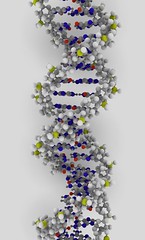
2307624861Double HelixDouble stranded shape of DNA7
2307625632GeneSequence of nucleotides on a chromosome.8
2307625633Guaninenitrogenous base in DNA & RNA9
2307627084Hydrogen BondBond that holds together nitrogenous bases.10
2307628441mRNAmessenger RNA; type of RNA that carries instructions from DNA in the nucleus to the ribosome. Templete for protein synthesis.11
2307628442Nitrogenous basesAdenine, Guanine, Thymine, Cytosine, and Uracil. Part of a nucleotide.12
2307629167Nucleic AcidDNA & RNA. Made up of nucleotides.13
2307629168NucleotideMake up DNA & RNA. Made of nitrogenous bases, 5 carbon sugar and phosphate.14
2307630249NucleusControl center of cell. DNA is located there.15
2307631349One gene-one polypeptide hypothesisA gene is a segment of DNA that codes for one polypeptide (protein).16
2307631350PhosphatePart of a nucleotide.17
2307632646ProteinMade up of a chain of amino acids.18
2307632647Protein SynthesisForming proteins based on information in DNA and carried out by RNA19
2307633780ReplicationProcess that DNA makes a copy of itself.20
2307633781RiboseSugar in RNA21
2307633782RibosomeLocation of protein synthesis in the cell.22
2307640265rRNARibosomal RNA23
2307640266TemplateA model, that can be used to make copies of that structure.24
2307641267ThymineNitrogenous base in DNA25
2307641268TranscriptionProcess that the DNA sequence in a gene is copied into mRNA26
2307643462tRNAtransfer RNA; type of RNA that carries amino acids to the ribosome27
2307646015UracilNitrogenous base in RNA28

Ch. 3 DNA and Molecular Genetics Flashcards

Mader Ch. 3

Terms : Hide Images
563462649Biotechnologyusing natural biological systems to create a product or to achieve an end desired by humans0
563462650Codonthree-base sequence in mRNA that directs ribosome to insert a specific amino acid into the polypeptide chain1
563462651DNAgenetic material of almost all organisms2
563462652DNA fingerprintingUsing DNA fragment lengths, resulting from restriction enzyme cleavage, to identify individuals3
563462653Gene therapycorrection of a detrimental mutation by adding normal DNA and inserting it into a genome4
563462654Genetic engineeringaltering DNA in bacteria, viruses, plants and animal cells through recombinant DNA technology5
563462655Genetic mutationA heritable change in nucleotide sequence (altered gene whose sequence of bases differs from the previous sequence)6
563462656Genomefull set of genetic information within an organism or virus7
563462657mRNAtype of RNA that takes information from DNA to the ribosomes to direct protein synthesis8
563462658PCRMethod used to make many many copies (to amplify) a specific DNA sequence9
563462659Recombinant DNAcontains DNA from 2 or more different sources10
563462660rRNAtype of RNA that combines with proteins to make ribosomes11
563462661TranscriptionProcess where a DNA strand serves as a template for the formation of RNA12
563462662tRNAtype of RNA that brings amino acids to the ribosome has an anticodon at one end that binds to the codon in mRNA13
563462663translationprocess whereby ribosomes use the sequence of codons in the mRNA to produce a polypeptide14
563492145DNA (3 functions)What cells replicate to be passed on to the next generation Stores information Undergoes mutations to provide genetic diversity15
563492146TwoNumber of strands in a typical DNA molecule16
563492147OneNumber of strands in a typical RNA molecule17
563492148the 3 types of RNAmessenger (m), ribosomal (r), and transfer (t)18
563492149transcriptionthe process that makes a complementary RNA copy of our genes/DNA19
563492150Amino acidsWhat proteins are made out of20
563492151ProteinsImportant molecules of the cell that perform metabolic reactions, mitosis, motility and more21
563492152Translation/Protein SynthesisRibosomes read mRNA and tRNAs bring correct amino acids in so proteins can be synthesized.22
563492153xeroderma pigmentosum-autosomal recessive disorder -individuals are deficient in enzyme(s) needed to repair mutations from UV light -eventually leads to skin cell cancers23
563492154achondroplasia-autosomal dominant disorder -caused by a single mutation -most common cause of short stature24
563492155products made by genetic engineeringInsulin, human growth hormone, clotting factor, TPA, HepB vaccine25
563492156bases found in DNAA, T, C and G26
563492157NucleusWhere DNA is found in the cell27
563501976Structure of DNADouble-helix28
563501977bases found in RNAA, U, C and G29
563501978nucleus and cytoplasmwhere RNA can be found in the cell30
563501979CG (AU would be found in RNA but not in DNA)Which of these would be a base-pair found in DNA? A. AU B. AG C. CG D. TU31
563507831DNA RNA TranscriptionMolecule on the left is _________. Molecule on the right is _________. Process is called ______________________.32
563513563tRNA anticodon one amino acidMolecule is a/an __________. Three bases at bottom are the _____________. Blue circle on top represents a/an _____________.33
563518626DNA is NOT involved in translationWhich of these is NOT involved in translation? A. RNA B. DNA C. Ribosomes D. tRNA34
563518627NucleusTranscription occurs in the: A. Nucleus B. Cytoplasm C. Ribosomes D. All of the above are correct35
563521673A. Hemophilia is X-linkedWhich of these is an X-linked disorder? A. Hemophilia B. Down Syndrome C. Marfan Syndrome D. Huntington Disease E. Cystic Fibrosis36
563521674E. Cystic Fibrosis is autosomal recessiveWhich of these is an autosomal recessive disorder? A. Hemophilia B. Down Syndrome C. Marfan Syndrome D. Huntington Disease E. Cystic Fibrosis37
563521675D. Huntington DiseaseWhich of the following is an autosomal dominant disorder? A. Hemophilia B. Down Syndrome C. Marfan Syndrome D. Huntington Disease E. Cystic Fibrosis38
563524564DNA double helix39
563524565MutationsMistakes in DNA replication can result in sequence changes called _____________________ .40

Cellular Biology with pictures Flashcards

biology

Terms : Hide Images
301255320EnzymeA protein that makes a reaction happen QUICKER; decreases activation energy of a reaction.0
301255321MitosisProcess of cells dividing; includes prophase, metaphase, anaphase, and telophase. (PMAT)1
301255322Organic Chemistrythe study of chemistry involved Carbon.2
301255323hydrogen bondsa weak force holding two molecules containing hydrogen together, occurs in water Where the dash - - - lines are in the picture3
301255324pH ScaleMeasurement system used to indicate acids and bases; runs from 0-14, with small numbers being acids and larger numbers being bases.4
301255325Macromolecules (macro=big, large)Large molecules in biological systems namely proteins, nucleic acids, carbohydrates, and lipids.5
301255326Chemical ReactionChange that takes place when two or more substances (reactants) interact to form new substances (products).6
301255327ATPChemical energy in cells.7
301255328CellBasic unit of life.8
301255329OrganelleSmall structures within cells that perform specific functions (ex. mitochondria, nucleus, ER).9
301255330ChromatinDNA in a more relaxed state before it becomes chromosomes.10
301255331ChromosomesStructures in a cell that contain genetic information.11
301255332CytoplasmEverything inside a cell except the nucleus.12
301255333ProkaryoteSingle celled microorganisms that lack a nucleus (ex. bacteria).13
301255334EukaryoteOrganism whose cells have a nucleus and organelles (ex. human cells)14
301255335Cell membraneBoundary between the cell and its environment; allows materials to move into and out of the cell. It's like a plastic bag with very small holes.15
301255336DiffusionMovement of materials from an area of higher concentration to lower concentration.16
301255337OsmosisDiffusion of water.17
301255338Aerobic Process (aero=air)Process that requires oxygen. Example: we need to breathe oxygen to run and exercise18
301255339Anaerobic Process (an=not aero=air)Process that does not require oxygen.19
301255340PhotosynthesisProcess by which plants use light, carbon dioxide, and water to produce oxygen and sugar.20
301255341Cellular Respiration (spir=to breathe)Process by which plants and animals use oxygen and carbohydrates to produce carbon dioxide, water, and energy.21
301255342FermentationProcess by which cells release energy in the absence of oxygen (ex. lactic acid or alcoholic).22
301255343Cell CycleSeries of events that cells go through as they grow and divide; includes interphase, mitosis, and cytokinesis.23
301255344Interphase (inter=between, phase=time period)Part of the cell cycle where the cell is growing; includes G1, S, and G2.24
301255345CytokinesisComplete separation of the 2 new cells resulting from mitosis.25

Chapters 1 & 2, Zumdahl Flashcards

These cards are based on the following text: "Chemistry (Seventh Edition) by Zumdahl & Zumdahl" (currently used by SMC Chem. department)
Some things from Chapters 1 & 2 have been left out because they cannot effectively be studied through flashcards.
If using these cards on a mobile phone, be sure to have an app. that enables picture flash cards. Recommended: "Flash Card Deluxe" for iPhone or "Flash Card" for Android

Terms : Hide Images
76191151What is the formula for % error?Where Ev = experimental value and Tv = True value0
76192916What is one formula for temperature conversions from Fahrenheit to Celsius?1
76192917What is an alternate formula for temperature conversions from Fahrenheit to Celsius?2
76192918What is the denisty formula?3
76202574What is the volume formula for a cube?l = length w = width h = height4
76202575What is the volume formula for a cylinder?r = radius h = height5
76202576What is the volume formula for a sphere?r = radius6
76202577What is the volume formula for a cone?r = radius h = height7
76205308What is the useful conversion factor that allows you to convert from liters to meters or vice-versa?1 mL = 1 cm³8
76205309What is matter?Something that occupies space & has mass9
76205310Technically speaking, what is a solution?A homogenous mixture10
76205311What does "homogenous" mean?Having visually indistinguishable parts11
76205312What does "heterogeneous" mean?Having visibly distinguishable parts12
76205313What is mass?Simply: the quantity of matter in an object Complicatedly: A measure of the resistance of an object to a change in its state of motion. Measured by the force necessary to give an object a certain accerlation. (Extra info: On earth we use the force that gravity exerts on an object to measure its mass, this force is called an object's weight)13
76205314What are the basic steps of the scientific method?1. Make observations - the flashlight doesn't work 2. Formulate hypothesis - the battery must be drained, so the flashlight doesn't work 3. Perform experiments - put fresh batteries in flashlight, see that it works now (note: this is based on the Zumdahl text, but seems to be a rather shallow, possibly slightly incomplete version of the sci. method)14
76205315SI unit for Mass?kilogram (kg)15
76205316SI unit for Length?meter (m)16
76205317SI unit for Time?second (s)17
76205318SI unit for Temperature?kelvin (K)18
76205319SI unit for Electric Current?ampere (A)19
76205320SI unit for Amount of substance?mole (mol)20
76205321SI unit for Luminous intensity?candela (cd)21
76205322What is the SI system?le Systéme International (International System). An Internationally agreed upon (1960) system of units derived from the metric system.22
76205323T/F: Measurements are always certain.False, there is always some degree of uncertainity (this is where significant figures comes into play)23
76205324What is accuracy?The agreement of a particular value with the true value.24
76205325What is precision?The degree of agreement among several measurments of the same quantity.25
76205555What are the two types of error? Describe each.Random Error: (indeterminate error) a measurmeant has an equal probability of being high or low. Systematic Error: (determinate error) either always high or always low; the error occurs in the same direction each time.26
76205556What is a pure substance?A substance with constant composition.27
76205557What is a mixture?A mixture of pure substances with variable composition.28
76289019What is a physical change?Change in the form of a substance, not its chemical composition. (Example: when water freezes/boils it changes its state but is still composed of H2O molecules)29
76289020Can a physical change separate a mixture into pure compounds?Yes. What it can't do is break compounds into elements.30
762890211 in = ? cm1 in = 2.54 cm31
762890221 mi = ? ft1 mi = 5280 ft32
762890231 lb = ? oz1 lb = 16 oz33
762890241 lb = ? g1 lb = 453.6 g34
762890251 L = ? qt1.06 qt35
762890261 gal = ? qt1 gal = 4 qt36
76289027What is a compound?A substance with constant composition.37
76289028Are elements decomposed into simpler substances by chemical or physical means?Neither. Elements cannot be decomposed into simpler substances by chemical or physical means.38
76289029What is a chemical change?Where a given substance becomes a new substance or substances with different properties and different composition.39
76291727What is temperature?A measure of the random motion of atoms/molecules on a macroscopic level, a measure of the heat intensity.40
76291728What are three methods for separating components of mixture?- Distillation. - Filtration - Chromatography41
76291729Describe Distillation.Depends on volatility (how readily subst. becomes gas). Simple distillation: Heat subst., vaporizes, vapor passes through cooled tube (condenser), vapor condenses back to liquid.42
76291730Describe Filtration.Used when mixture consits of solid & liquid. Mixture poured onto mesh, passes the liquid and leaves the solid behind.43
76291731Describe ChromatographyUses two phases (states) of matter: mobile & stationary. Paper Chromat: Drop of mixt. placed on paper, dipped into liquid (mobile phase), liqd. travels up paper.44
76291732What is mass number?# of proton and # of neutron in atom. This is not on the Periodic Table This is represented by the letter A.45
76291733What is atomic number?# of protons in atom. This is represented by the letter Z. This denotes position of element (based on number of protons) on periodic table.46
76291734How are mass number and atomic number depicted with the element symbol?Recall: Mass # (A) = # of proton + # of neutron Atomic # (Z) = # of proton47
76292083SbAntimony (Original name: Stibium)48
76292085CuCopper (Original name: Cuprum)49
76292087FeIron (Original name: Ferrum)50
76292089PbLead (Original name: Plumbum)51
76292091HgMercury (Original name: Hydrargyrum)52
76292093KPotassium (Original name: Kalium)53
76292095AgSilver (Original name: Argentum)54
76292096NaSodium (Original name: Natrium)55
76292098SnTin (Original name: Stannum)56
76292100WTungsten (Original name: Wolfram)57
76294817What is Avogadro's Hypothesis?At the same temperature and pressure, equal volumes of different gases contain the same number of particles.58
76294818J.J. Thomson is important for...?Cathode-ray tubes: Ray produced at negative electrode, it was repelled by negative pole of electric fieled -> JJ thought ray was stream of negatively charged particles (now called electrons). Plum Pudding Model - electrons like rasin dispersed in pudding (incorrect) Charge-to-mass ratio of electron: e represents charge on electron in coulombs (C) m represents electron mass (g)59
76294819Robert Millikan is important for...?Oil drop experiments -> determined magnitude of electron charge. This value + charge-to-mass (from JJ T.) = mass of the electron (9.11 x 10⁻³¹ kg)60
76294820Ernest Rutherford is important for...?Tested JJ's PlumPudding model. Directed α particles towards thin metal foil. (If JJ right, particles should pass through foil w/ minor deflection) most did go straight BUT many were deflected @ large angles & some totally reflected. Deflections could only be caused by concentrated + charged center (containing most mass)61
76294821If atoms are composed of the same components, why do different atoms have different chemical properties?Answer lies in the number and arrangement of electrons. More electrons allows for more "intermingling" for atoms to combine to form molecules.62
76294822What is an isotope?An atom with the same number of protons but different number of neutrons63
76294823A positive ion is...?A cation64
76294824A negative ion is...?An anion65
76294825What is an ionAn atom or group of atoms that has a net positive or negative charge.66
76294826What is ionic bonding?Force of attraction between oppositely charged ions.67
76297641Characteristics of metals?Physical Properties: efficient conduction of heat & electricity, malleability (hammer into thin sheets), ductility (pull into wires), lustrous appearance. Chemically: tend to lose electrons (form + ions)68
76297642Characteristics of nonmetals?Chemically: gain electrons to form - ions, often bond to each other (forming covalent bonds), Found in: Upper-right corner of table (except H)69
76297643How is the Periodic Table divided?Rows: #'s used to identify "periods" Columns: Called groups or families. Have similar chemical properties.70
76297644Where are the alkali metals? Briefly describe them.Group 1A. Very active elements that readily form ions with a 1+ charge, when they react with nonmetals.71
76297645Where are the halogens? Briefly describe them.Group 7A. All form diatomic molecules.72
76297646Where are the noble gases? Briefly describe them.Group 8A. They all exist (under normal conditions) as monatomic (single-atom) gases. Have little chemical reactivity.73
76297647Where are the alkaline earth metals? Briefly describe them.Group 2A. They all form ions with a 2+ charge, when they react with nonmetals.74
763615201 m = ? yd1 m = 1.094 yd75
763615211 kg = ? lb1 kg = 2.205 lb76
763615221 ft³ = ? L1 ft³ = 28.32 L77
76362059Where are the Lanthanides?Element 58 - 71 (top row at the bottom)78
76362060Where are the transition metals?79
76362061Where are the Actinides?Elements 90 - 103 (bottom of bottom)80
76713843Briefly describe Dalton's atomic theory- all elements are composed of atoms - all atoms of a given element are identical - chemical compounds are formed when atoms combine - atoms are not changed in chemical reactions but the way they are bound together changes81
76718345Define: Law of Conservation of MassMass is neither created nor destroyed.82
76718346Define: Law of Definite ProportionA given compound always contains exactly the same proportion of elements by mass.83
76718347Define: Law of Multiple ProportionsWhen two elements form a series of compounds, the ratios of the masses of the second element that combine with 1 gram of the first element can always be reduced to small whole numbers.84
77829254At room temperature which elements are solid?All metals [except Hg(l) ] + some others85
77829255At room temperature which elements are liquid?Hg(l) and Br₂(l)86
77829256At room temperature which elements are gas?All the noble gases and H₂, N₂, O₂, F₂, Cl₂87
77829257Which molecules are diatomic?H₂(g), N₂(g), O₂(g), F₂(g), Cl₂(g), Br₂(l), I₂(s), At₂(s) Notice all of the halogens are diatomic.88

Biology Chapter 6 The Cell Flashcards

Cell structure and function

Terms : Hide Images
466849362plasma membraneselective barrier that allows enough oxygen, nutrients, and wastes to pass through it to repair the entire cell0
466849363endoplasmic reticulum (ER)web of membrane-like sacs and tubes, active in membrane building and other building and metabolic actions1
466849364Rough ERstudded with ribosomes on the outside2
466849365Smooth ERno ribosomes on the outside3
466849366organellesparts within a eukaryotic cell surrounded by a membrane4
466849367eukaryotic cellmost DNA is in the nucleus which is surrounded by a double membrane5
466849368prokaryotic cellDNA is in an area of the cell that is not surrounded by a membrane, called the Nucleoid6
466849369eukaryotic means:"true nucleus"7
466849370prokaryotic means:"before nucleus"8
466849371cytoplasminside of a cell; in eukaryotic cells is the area between the nucleus and plasma membrane9
466849372nucleuscontains most of the genes in eukaryotic cell10
466849373nuclear envelopedouble membrane surrounding nucleus, separating inside from cytoplasm11
466849374nucleolusstructure without a membrane involved in making ribosomes; a nucleus has one or more nucleoli (plural)12
466849375chromatinmaterial made up of DNA and proteins; visible in a dividing cell as individual shortened chromosomes13
466849376chromosomesorganized units of DNA (genetic info)14
466849377flagellummoving structure present in some animal cells, made of a cluster of microtubules within an extension of the plasma membrane15
466849378microtubuleshollow cylindrical structures in the cytoplasm, shape cell, guide organelle movement, and separate chromosomes in dividing cells16
466849379centrosomearea where the cell's mircotubules are set off/out; has a pair of centrioles17
466849380centriolesmade of nine sets of triplet microtubules made into a ring are inside a centrosome18
466849381cytoskeletonholds cell's shape; works in cell movement; insides made of protein. Includes: microfilaments intermediate filaments microtubules19
466849382microfilamentstwo twisted strands of actin, each a polymer of actin units20
466849383intermediate filamentsfiberous (many fibers) proteins twisted into thicker cables21
466849384microvillitentacle-like parts that stick out from cell that increase cell's surface area22
466849385peroxisomeorganelle with different special metabolic functions; produces hydrogen peroxide as a by-product, then turns it into water23
466849386metabolic functionsenergy producing functions through physical and chemical series of actions in the cell24
466849387mitochondrionorganelle where cellular respiration happens and most ATP is created25
466849388lysosomedigestive organelle where macromolecules are hydrolyzed26
466849389hydrolysisbreaking up of a polymer into monomers by breaking the bond between monomers by adding a water molecule; the hydrogen from the water attaching to the adjacent monomer27
466849390dehydration reactiona reaction that covalently bonds (sharing of electrons) two monomers (small molecules) together with the loss of a water molecule28
466849391golgi apparatusorganelle active in building, partially changing, sorting, and secretion ( to release) of cell products29
466849392in animal cells but not plant cells:lysosomes centrosomes, with centrioles flagella (but in some plant sperm)30
466849393cell walloutside layer that keeps cell shape and protects cell from friction or scraping; made of cellulose, other polysaccharides, and protein31
466849394cellulosecarbohydrate32
466849395plasmodesmatacytoplasmic channels (tunnels) through cell walls that connect the cytoplasms of surrounding cells33
466849396chloroplastphotosynthetic organelle; converts energy of sunlight to chemical energy stored in sugar molecules34
466849397central vacuolelarge clear sack-like organelle; storage, breakdown of waste products, hydrolysis of macromolecules; enlargement of vacuole is a major part that causes plant growth35
466849398in plant cells but not animal cellschloroplasts central vacuole cell wall plasmodesmata36
466849399nuclear laminanetlike display of protein thread-like structures that keeps the shape of the nucleus by working to support the nuclear envelope37
466849400vesiclessacs made of membrane that ship proteins into membranes and organelles38
466849401transport vesiclesvesicles in motion from one part of the cell to another39
466849402vacuoleslarge sacs received from the ER and golgi apparatus, selective in moving solutes, the inside is a different solution than the cytosol40
466849403enzymea macromolecule serving as a catalyst, a chemical thing that speeds up a reaction without being used up in the reaction. most enzymes are proteins41
466849404phagocytosis (faygoh-sightoesis)protists and other eukaryotes completely ingesting smaller living creatures or food particles42
466849405autophagy (auto-faygee)lysosomes use their hydrolytic enzymes (macromolecules) to reuse the cell's own living material (recycling)43
466849406food vacuolesformed by phagocytosis that comes together with a lysosome and the enzymes of the lysosome digest food44
466849407example of human cells doing phagocytosismacrophages, a white blood cell that helps protect the body by eating and destroying bacteria and other foreign things in the body45
466849408contracile vacuolespumps excess water out of the cell, and keeps a balanced concentration of ions and molecules inside cell, many freshwater protists have this.46
466849409central vacuolecreated by the growing together of smaller vacuoles, usually inside mature plant cells and are important in growth of plant cells47
466849410cell respirationmetabolic process that uses oxygen to make ATP by taking energy from sugars, fats, and other fuels48
466849411photosynthesischanging sun energy to chemical energy by absorbing sunlight and using it to drive the building of living compounds such as sugars FROM CARBON DIOXIDE AND WATER49
466849412endosymbionta cell living within another cell50
466849413cristaethe twisted and coiled flaps inside the inner membrane of a mitochonrion (which has 2 membranes)51
466849414two compartments of mitochondrion made by inner membrane1 intermembrane space, narrow area between the inner and outer membranes 2 mitochondrial matrix52
466849415mitochondrial matrixinside the inner membrane and has many different ezymes as well as DNA and ribosomes. enzymes here catalyze (speed up) some steps of cell respiration other proteins that work in respiration ( ex. enzyme making ATP) are built inside the inner membrane53
466849416thylakoidsmembrane system of flattened connected sacs inside a chloroplast54
466849417granum (plural, grana)poker chip-like stacks of thylakoids55
466849418stromafluid outside thylakoids, contains chloroplast DNA, ribosomes, and many enzymes56
466849419plastidsfamily of related plant organelles, chloroplast is one of them57
466849420two types of plastids1 AMYLOPLAST, colorless organelle that stores starch (amylose) in roots and tubers 2 CHROMOPLAST, has colors (pigments) that give fruits and flowers orange and yellow colors58
466849421perixisomespecial metabolic storage unit that is surrounded by a single membrane, has enzymes that remove hydrogen atoms from different substances acted upon by enzymes, and transfer them to oxygen, making hydrogen peroxide as a second product59
466849422cytoskeletongroup of fibers that spread throughout the cytoplasm, organizes the structures and activities of the cell made up of microtubules, microfilaments, and intermediate60
466849423cytoskeleton made up ofmicrotubules microfilaments intermediate filaments61
466849424cell motitilty requires interaction between what two things:cytoskeleton with motor proteins62
466849425motor proteinsattach to protein molecules in surface membranes on fluid-filled cavities and can "walk" the vesicles along microtubules or microfilaments63
466849426microtubuleshollow tubes with wall made up of 13 columns of tubulin molecules (polymers)64
466849427functions of microtubuleskeep cell shape with compression-resisting "girders" cell mobility (through cilia or flagella) chromosome movements in cell division organelle movements65
466849428microfilamentstwo twisted strands of actin, each a polymer of actin subunits (partial units)66
466849429functions of microfilamentskeeping cell shape through tension-bearing elements changes in cell shape muscle contraction cytoplasmic streaming cell movement (pseudopodia) cell division (cleavage furrow formation)67
466849430intermediate filamentsfibrous (lots of fibers together) proteins tightly coiled into thicker cables (strands)68
466849431functions of intermed. filamentskeeping cell shape (tension bearing elements) holding down nucleus and other organelles making nuclear lamina69
466849432pseudopodiacell extensions that move cells along a surface contract by actin and myosin70
466849433actinmolecules that are a sphere-shaped protein builds actin filaments (microfilaments)71
466849434microfilamentssolid rods that are built by actin molecules twisted double chain of actin units seem to be present in all eukaryotic cells72
466849435functions of microfilaments-make structural webs when certain proteins bind together along the side of an actin filament and -makes a new filament extend out as a branch - bears tension (pulling forces) supports shape of cell73
466849436cortexouter cytoplasmic layer of a cell that is given a gel-like firmness because of web of microfilaments74
466849437myosinprotein that makes thick filaments (rods) that surround thousands of parallel actin filaments along a muscle cell75
466849438dyneinslarge motor proteins made of several polypeptides-(chain of amino acids linked by peptide bonds) responsible for bending movements of cilium or flagellum76
466849439basal bodyeukaryotic cell structure made of a "9+0" (nine triplets made into a ring, no central microtubules) arrangement of microtubule triplets. organize the microtubule order of a cilium or flagellum very similar to centriole structure77
466849440cytoplasmic streamingcircular flow of cytoplasm within cells (common in large plant cells) speeds the sorting of materials within the cell78
466849441primary cell wallthin and flexible wall created by young plant cells79
466849442pectinthickening agents, sticky polysaccharides (are used to thicken jams and jellies)80
466849443middle lamellathin layer rich in pectins between the main walls of neighboring cells that glues them together81
466849444secondary cell wallseveral set layers has a strong and durable matrix that protects and supports the cell located between the plasma membrane and the primary cell wall -this is produced when cells mature and stop growing82
466849445extracellular matrix (ECM)made of glycoproteins and other carbohydrate-containing molecules released by cells83
466849446glycoproteinsproteins with covalently (shared electron) bonded carbohydrate, usually short chains of sugars84
466849447collagenmost common glycoprotein in ECM of most animal cells forms strong fibers(threads) outside othe cells85
466849448proteoglycansweb released by cells that holds collagen fibers in it86
466849449fibronectinECM glycoproteins that attaches some cells to the ECM87
466849450integrinscell surface binding proteins that bind to firbonectin and other ECM proteins built into plasma membrane88

Pages

Subscribe to CourseNotes RSS

Need Help?

We hope your visit has been a productive one. If you're having any problems, or would like to give some feedback, we'd love to hear from you.

For general help, questions, and suggestions, try our dedicated support forums.

If you need to contact the Course-Notes.Org web experience team, please use our contact form.

Need Notes?

While we strive to provide the most comprehensive notes for as many high school textbooks as possible, there are certainly going to be some that we miss. Drop us a note and let us know which textbooks you need. Be sure to include which edition of the textbook you are using! If we see enough demand, we'll do whatever we can to get those notes up on the site for you!